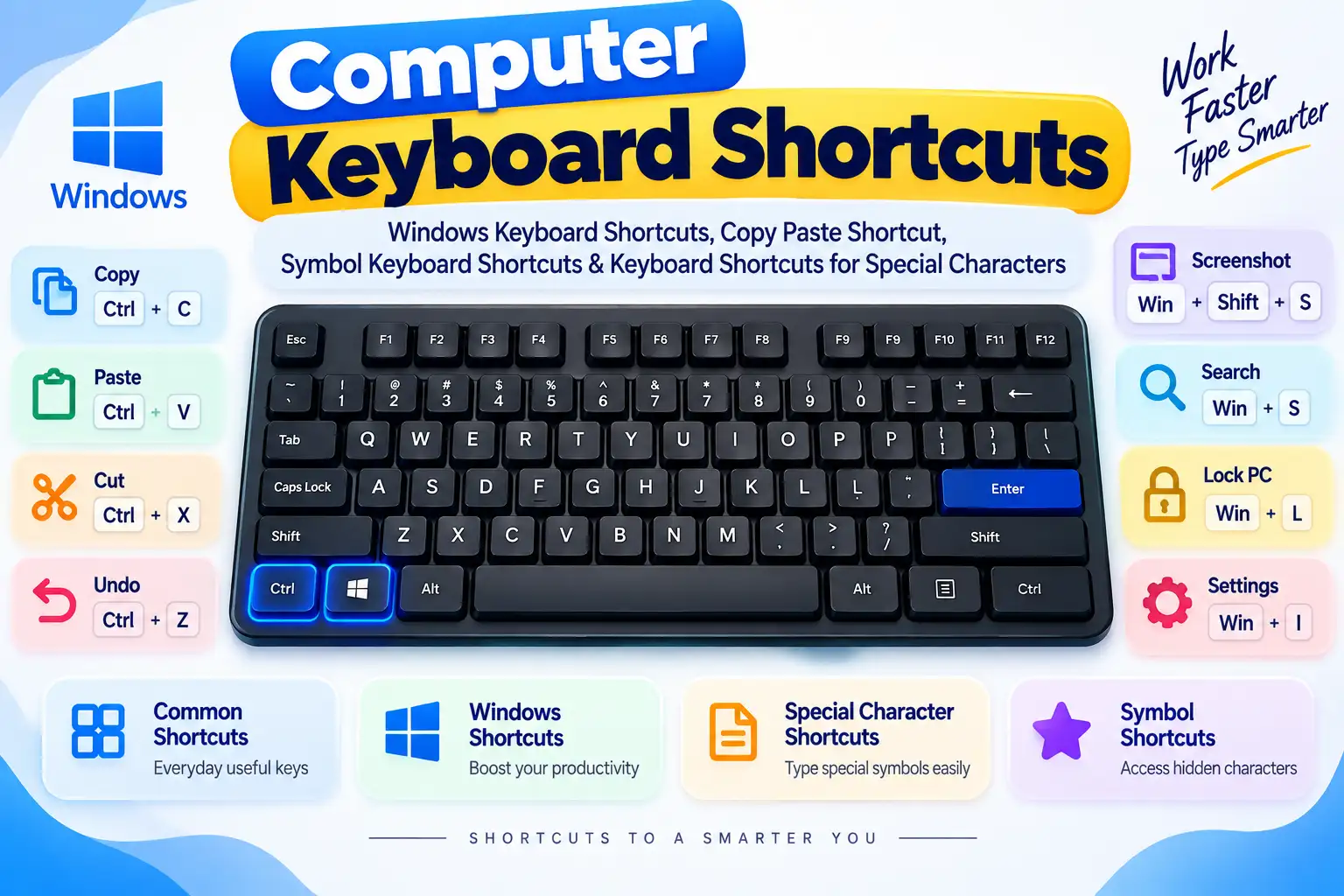
How to Type A with Accent (á, à, â, ä, ã, å): Windows, Mac, Word & Mobile Shortcuts
Need to know how to type A with accent marks (á, à, â, ä, ã, å, a) on your computer or phone? Use our 1-click copy chips below or follow our verified shortcuts for Windows Alt codes (Alt + 160 / Alt + 0225), Mac Option keys (Option + e then a), Microsoft Word dead keys (Ctrl + ' then a), US-International keyboard, iPhone, Android, and our complete A to Z accent letters directory.
CLICK TO COPY A WITH ACCENTS INSTANTLY
Unicode: U+00E1•Windows: Alt + 160•Mac: Option + e then a•Word: Ctrl + ' then a
The letter A is paired with numerous diacritical marks in global languages—including Spanish, French, German, Portuguese, Italian, Swedish, Danish, Norwegian, Polish, and Latvian. Whether you need an acute accent for Spanish verb conjugation, a grave accent for French prepositions, an umlaut for German plurals, or a tilde for Portuguese nasal vowels, below is your complete cross-platform reference table:
Character & Accent Name
Glyph
Windows Alt Code
Mac Shortcut
MS Word Shortcut
US-Intl Dead Key
Unicode / HTML
A with Acute
á / Á
Alt+160 / Alt+0193
Option+e then a
Ctrl+' then a
' + a
U+00E1 | á
A with Grave
à / À
Alt+133 / Alt+0192
Option+` then a
Ctrl+` then a
` + a
U+00E0 | à
A with Circumflex
â / Â
Alt+131 / Alt+0194
Option+i then a
Ctrl+Shift+^ then a
^ + a
U+00E2 | â
A with Umlaut / Diaeresis
ä / Ä
Alt+132 / Alt+142
Option+u then a
Ctrl+Shift+: then a
" + a
U+00E4 | ä
A with Tilde
ã / Ã
Alt+0227 / Alt+0195
Option+n then a
Ctrl+Shift+~ then a
~ + a
U+00E3 | ã
A with Ring Above
å / Å
Alt+134 / Alt+143
Option+k (or Option+a)
Ctrl+Shift+@ then a
AltGr + w
U+00E5 | å
A with Macron
a / A
Alt+0257 / Alt+0256
Character Viewer / Key-hold
Type 0101 then Alt+X
Dead key macro
U+0101 | ā
A with Ogonek
a / A
Alt+0261 / Alt+0260
Key-hold a menu
Type 0105 then Alt+X
AltGr + a (Polish)
U+0105 | ą
WINDOWS OS
How to Type A with Accent on Windows (5 Methods)
Windows personal computers offer multiple hardware and software pathways to insert A with accent marks:
Method 1: Windows Alt Codes (Numeric Keypad)
Using the separate 10-key numeric keypad on the right side of your keyboard, hold down the Alt key and type the corresponding number:
á (Acute):Alt + 160 or Alt + 0225 | Á (Capital):Alt + 0193
à (Grave):Alt + 133 or Alt + 0224 | À (Capital):Alt + 0192
â (Circumflex):Alt + 131 or Alt + 0194 | Â (Capital):Alt + 0194
ä (Umlaut):Alt + 132 or Alt + 0228 | Ä (Capital):Alt + 142 (or 0196)
ã (Tilde):Alt + 0227 | Ã (Capital):Alt + 0195
å (Ring):Alt + 134 or Alt + 0229 | Å (Capital):Alt + 143
If you frequently write in Spanish, French, German, or Portuguese, adding the US-International Keyboard layout in Windows Settings enables intuitive "dead keys":
1
Acute Accent (á): Press the single quote key ('), then press a → gives á.
2
Grave Accent (à): Press the backtick key (`), then press a → gives à.
3
Circumflex (â): Press Shift + 6 (^), then press a → gives â.
4
Umlaut / Diaeresis (ä): Press Shift + ' ("), then press a → gives ä.
5
Tilde (ã): Press Shift + ` (~), then press a → gives ã.
Method 3: Windows Emoji & Symbol Panel (Win + .)
Press Win + . (Windows Key + Period) or Win + ;.
Click the Symbols (Ω) icon at the top → click Latin Symbols / Language tab → click your desired A-accent glyph.
APPLE MACOS
How to Type A with Accent on Mac (macOS)
Apple macOS provides the most elegant native diacritic typing mechanics on any operating system:
Method 1: The Option Key Combination System (Universal on macOS)
Accent Type
Mac Option Shortcut Key
Followed by Letter
Result
Acute Accent (á)
Option + e
Press a (or Shift+a)
á (or Á)
Grave Accent (à)
Option + `
Press a (or Shift+a)
à (or À)
Circumflex (â)
Option + i
Press a (or Shift+a)
â (or Â)
Umlaut / Diaeresis (ä)
Option + u
Press a (or Shift+a)
ä (or Ä)
Tilde (ã)
Option + n
Press a (or Shift+a)
ã (or Ã)
Ring Above (å)
Option + k (or Option+a)
Instant keypress
å (or Å)
Method 2: Press-and-Hold Accent Menu (macOS Built-in)
On any Mac keyboard, simply press and hold down the letter a (or Shift + a for capital). A numbered popup overlay will appear showing all variations: 1: à, 2: á, 3: â, 4: ä, 5: ã, 6: å, 7: a, 8: a. Press the corresponding number on your keyboard to insert it.
OFFICE SUITE
How to Type A with Accent in Microsoft Word, PowerPoint & Excel
Microsoft Word features dedicated Ctrl-based dead key shortcuts that function on all Windows computers without needing the numeric keypad:
Microsoft Word Shortcuts
á (Acute): Press Ctrl + ' (Apostrophe), release, then press a.
à (Grave): Press Ctrl + ` (Backtick), release, then press a.
â (Circumflex): Press Ctrl + Shift + ^ (Number 6), release, then press a.
ä (Umlaut): Press Ctrl + Shift + : (Colon), release, then press a.
ã (Tilde): Press Ctrl + Shift + ~ (Tilde), release, then press a.
å (Ring): Press Ctrl + Shift + @ (Number 2), release, then press a.
Note: For capital letters (Á, À, Â, Ä, Ã, Å), hold Shift when pressing the final A.
Microsoft Excel Formulas
In Excel formulas and automated spreadsheets, dynamically generate accented A characters with UNICHAR:
=UNICHAR(225) outputs á | =UNICHAR(193) outputs Á
=UNICHAR(224) outputs à | =UNICHAR(192) outputs À
=UNICHAR(228) outputs ä | =UNICHAR(196) outputs Ä
=UNICHAR(227) outputs ã | =UNICHAR(229) outputs å
MOBILE DEVICES
How to Type A with Accent on iPhone, iPad & Android
iOS (Apple iPhone and iPad)
Press and hold down the letter a on the virtual touchscreen keyboard.
A horizontal bubble menu will appear showing: á, à, â, ä, ã, å, a, and a.
Slide your finger to the accent you need and lift your finger to insert it. For capital accented A, tap Shift first, then press and hold A.
Android (Google Gboard & Samsung Keyboard)
On Gboard and Samsung keyboards, press and hold down the a key.
Slide your thumb across the popup row to select your accented letter.
LINGUISTIC & GRAMMAR RULES
Linguistic & Grammatical Significance of A-Accent Marks Across World Languages
Diacritical marks on the letter A are not merely decorative; they fundamentally govern pronunciation, syllabic stress, phonemic identity, and word definitions across global languages:
Spanish: The Acute Accent (Acento Agudo — á)
In Spanish, the acute accent on á serves two critical grammatical functions:
Phonetic Syllabic Stress: Spanish words ending in a vowel, n, or s naturally place stress on the second-to-last syllable (llana). When a word breaks this rule and stresses the final syllable (aguda), an accent is required (e.g. está "is" vs. esta "this", papá "dad" vs. papa "potato/pope", cantará "he will sing").
Diacritical Homograph Tilde: Distinguishes words spelled identically with different meanings (e.g. más "more" vs. mas "but").
French: Grave (à) and Circumflex (â)
Grave Accent (Accent grave — à): Distinguishes the preposition à (meaning "to", "at", or "in") from the third-person verb a (meaning "has", from avoir). It also appears in adverbs like là ("there") vs la ("the").
Circumflex (Accent circonflexe — â): Denotes a historical vowel lengthening resulting from the disappearance of an 's' in Old French etymology (e.g. château from Latin castellum / Old French chastel, bâtiment from bastiment, âge from aage).
German: The Umlaut (ä / Ä)
The German ä represents a fronted vowel sound (/?/ or /e:/), distinct from the back vowel /a/. In German grammar, the umlaut frequently signals plural noun inflections (e.g. der Apfel "apple" → die Äpfel "apples", das Rad "wheel" → die Räder "wheels") and comparative adjectives (alt "old" → älter "older"). If typing on an ASCII keyboard without umlauts, standard German orthography permits substituting ae (e.g. Mädchen → Maedchen).
Portuguese: The Tilde (ã) and Acute (á)
In Portuguese, ã represents a nasalized open back vowel sound (/?~/). It is one of the most recognizable Portuguese phonemes, found in common words such as São Paulo, amanhã ("tomorrow"), mão ("hand"), and coração ("heart"). The grave accent à indicates crase (crasis)—the contraction of the preposition a with the feminine article a.
Scandinavian: The Ring Above (å / Å)
In Swedish, Danish, and Norwegian, å is not treated as an accented 'A', but as a completely separate letter of the alphabet situated at the very end of the alphabet (after Z, Æ, Ø / Ä, Ö). It represents the open-mid back rounded vowel sound (/?/).
For software developers, web engineers, and technical document writers, below is the complete technical character specification for all A-accent variations:
Character
Unicode Code Point
HTML Named Entity
HTML Decimal / Hex
CSS Escape
JavaScript / Python
á (Lowercase Acute)
U+00E1
á
á / á
\00E1
"\u00E1"
Á (Capital Acute)
U+00C1
Á
Á / Á
\00C1
"\u00C1"
à (Lowercase Grave)
U+00E0
à
à / à
\00E0
"\u00E0"
À (Capital Grave)
U+00C0
À
À / À
\00C0
"\u00C0"
â (Lowercase Circumflex)
U+00E2
â
â / â
\00E2
"\u00E2"
ä (Lowercase Umlaut)
U+00E4
ä
ä / ä
\00E4
"\u00E4"
Ä (Capital Umlaut)
U+00C4
Ä
Ä / Ä
\00C4
"\u00C4"
ã (Lowercase Tilde)
U+00E3
ã
ã / ã
\00E3
"\u00E3"
å (Lowercase Ring)
U+00E5
å
å / å
\00E5
"\u00E5"
a (Lowercase Macron)
U+0101
ā
ā / ā
\0101
"\u0101"
Visual Guide: Typing accented A letters, Alt codes, and dead key shortcuts across all platforms
FREQUENTLY ASKED QUESTIONS
Frequently Asked Questions About Typing A with Accents
For lowercase á (acute), use Alt + 160 or Alt + 0225. For à (grave), use Alt + 133 or Alt + 0224. For â (circumflex), use Alt + 131. For ä (umlaut), use Alt + 132. For ã (tilde), use Alt + 0227. For å (ring), use Alt + 134. For capital Á, use Alt + 0193.
On Mac (macOS), hold Option while typing the accent modifier key, then release and press a. For á press Option + e then a; for à press Option + ` then a; for â press Option + i then a; for ä press Option + u then a; for ã press Option + n then a. You can also simply hold down the a key.
In Word, press Ctrl + ' then a for á, Ctrl + ` then a for à, Ctrl + Shift + ^ then a for â, Ctrl + Shift + : then a for ä, and Ctrl + Shift + ~ then a for ã. For uppercase Á, hold Shift when typing A.
On Windows, use Alt + 0193 for Á, Alt + 0192 for À, Alt + 0194 for Â, Alt + 142 (or Alt + 0196) for Ä, Alt + 0195 for Ã, and Alt + 143 for Å. On Mac, use the standard Option shortcut and press Shift + A.
With the US-International keyboard layout enabled, punctuation keys act as 'dead keys': typing ' followed by a gives á, ` followed by a gives à, ^ followed by a gives â, " followed by a gives ä, and ~ followed by a gives ã.
For á use á (U+00E1); for à use à (U+00E0); for â use â (U+00E2); for ä use ä (U+00E4); for ã use ã (U+00E3); for å use å (U+00E5); for a use ā (U+0101).
On both iOS and Android, press and hold down the letter a (or capital A) on the touchscreen keyboard until a popup menu with á, à, â, ä, ã, å, a, and a appears. Slide your thumb across to the desired accent and release.
In Spanish, the acute accent (á) indicates stressed syllables and distinguishes homographs (está vs esta). In French, à differentiates prepositions from verbs. In German, the umlaut ä changes pronunciation and creates plurals. In Portuguese, the tilde ã indicates nasal vowel pronunciation.
A TO Z ACCENT LETTERS & DIACRITICS DIRECTORY
A to Z Accent Letters Hub & Related Diacritics Guides
Need to type other accented vowels, umlauts, tildes, cedillas, or special characters? Explore our dedicated accent directories and interactive typing tools below: