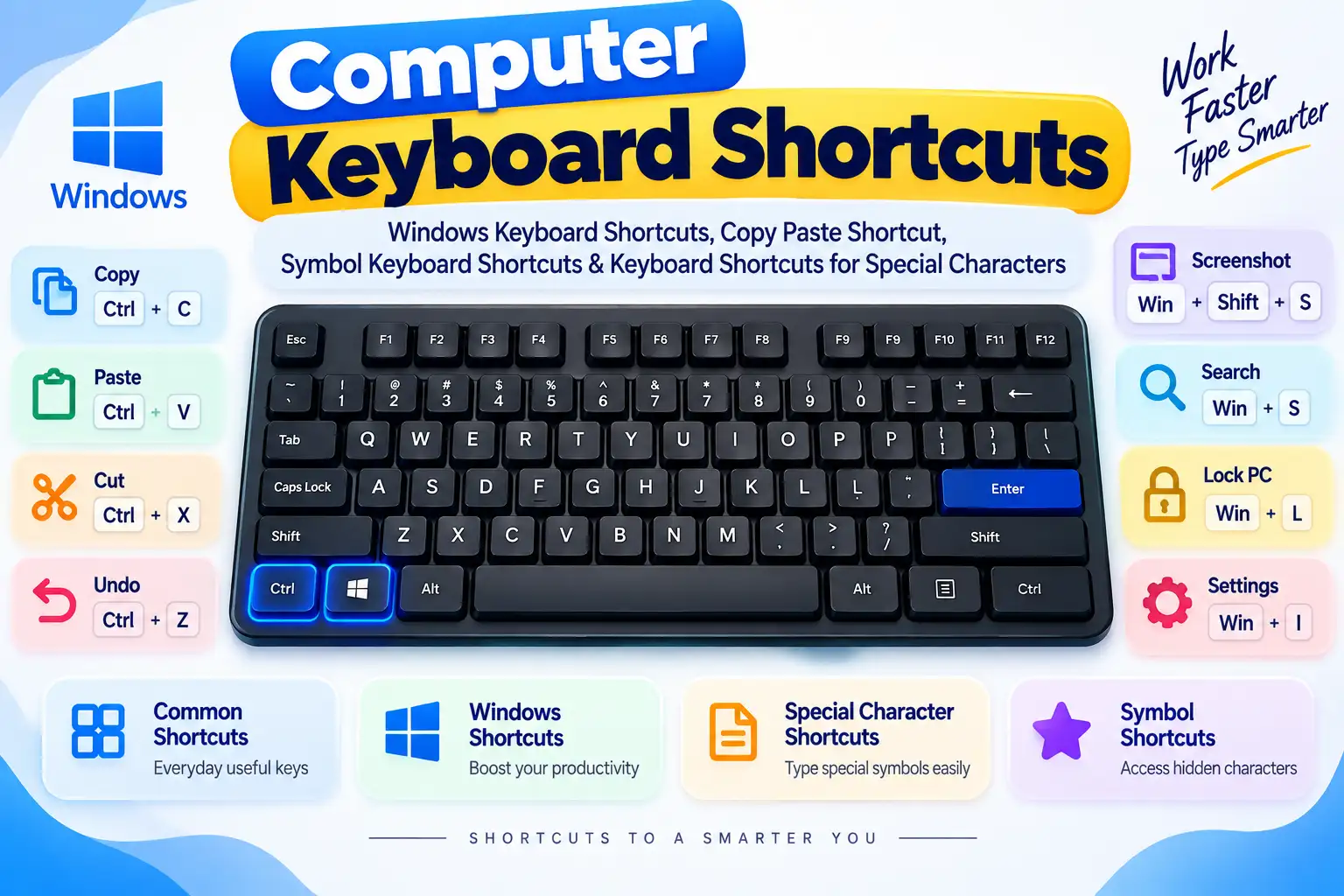
How to Type D with Accent (ď, ḋ, ḍ, đ): Windows, Mac, Word & Mobile Shortcuts
Need to know how to type D with accent marks (ď, Ď, ḋ, Ḋ, ḍ, Ḍ, ḏ, Ḏ) on your computer or phone? Use our 1-click copy chips below or follow our verified shortcuts for Windows Alt codes (Alt + 0271 / Alt + 0273), Microsoft Word Unicode converter (010F + Alt + X), Mac press-and-hold menus, Czech caron rules, South Slavic & Vietnamese stroke letters, and our complete A to Z accent letters directory.
CLICK TO COPY D WITH ACCENTS INSTANTLY
Unicode: U+010F•Windows: Alt + 0271•Word: 010F + Alt + X•HTML: ď
Diacritics on the letter D play vital phonemic roles across Slavic languages (Czech, Slovak, Croatian, Serbian, Bosnian), Southeast Asian languages (Vietnamese), Celtic philology (traditional Irish Gaelic), and academic transliterations (Sanskrit IAST, Biblical Hebrew, Arabic). Below is your complete cross-platform reference table:
Character & Accent Name
Glyph
Windows Alt Code
Mac Shortcut
MS Word Hex Shortcut
Unicode Code Point
HTML Entity
D with Caron (Hácek)
d / D
Alt+0271 / Alt+0270
Hold d (menu #1)
010F + Alt+X (010E for D)
U+010F / U+010E
ď / Ď
D with Stroke (Crossed D)
d / Ð
Alt+0273 / Alt+0272
Hold d (menu #2)
0111 + Alt+X (0110 for Ð)
U+0111 / U+0110
đ / Đ
D with Dot Above
ḋ / ḋ
Alt+7691 / Alt+7690
Character Viewer / ABC Ext
1E0B + Alt+X (1E0A for ḋ)
U+1E0B / U+1E0A
ḋ / Ḋ
D with Dot Below
ḍ / ḍ
Alt+7693 / Alt+7692
Character Viewer / Combining Dot
1E0D + Alt+X (1E0C for ḍ)
U+1E0D / U+1E0C
ḍ / Ḍ
D with Line Below (Macron Below)
ḏ / ḏ
Alt+7695 / Alt+7694
Character Viewer / Combining Macron
1E0F + Alt+X (1E0E for ḏ)
U+1E0F / U+1E0E
ḏ / Ḏ
D with Cedilla
ḑ / ḑ
Alt+7697 / Alt+7696
Character Viewer / ABC Ext
1E11 + Alt+X (1E10 for ḑ)
U+1E11 / U+1E10
ḑ / Ḑ
WINDOWS OS
How to Type D with Accent on Windows (5 Methods)
Windows personal computers offer multiple hardware and software pathways to insert D with accent marks:
Method 1: Windows Alt Codes (Numeric Keypad)
Using the separate 10-key numeric keypad on the right side of your keyboard, hold down the Alt key and type the corresponding number:
d (D with Caron):Alt + 0271 | D (Capital):Alt + 0270
d (D with Stroke):Alt + 0273 | Ð (Capital):Alt + 0272
How to Type D with Accent on iPhone, iPad & Android
iOS (Apple iPhone and iPad)
Press and hold down the letter d on the virtual touchscreen keyboard.
A horizontal bubble menu will appear displaying: d, d, and ð.
Slide your finger to the accent you need and lift to insert. For capital accented D, tap Shift first, then press and hold D.
Android (Google Gboard & Samsung Keyboard)
On Gboard and Samsung keyboards, press and hold down the d key.
Slide your thumb across the popup row to select your accented letter (d, d).
LINGUISTIC & GRAMMAR RULES
Linguistic, Historical & Grammatical Significance of D-Accent Marks
Diacritical modifications of the letter D serve crucial phonemic functions across Western Slavic, South Slavic, Southeast Asian, and Semitic languages:
Czech & Slovak: The Caron / Hácek (d / D)
In Czech and Slovak, d represents the voiced palatal plosive (/?/), which sounds like a soft 'd' merged with 'y' (similar to d in English duty in British pronunciation):
Typographical Peculiarity: Lowercase d uses an apostrophe-like stroke/hook attached to the ascender (d), whereas capital D uses the standard wedge caron (D). This typographical adaptation was introduced in early Czech printing to prevent the caron wedge from colliding with tall vertical ascenders (similar to t and l).
Common Vocabulary: Found in words like Czech dábel ("devil"), das, and Slovak dakujem ("thank you").
South Slavic & Vietnamese: D with Stroke (d / Ð)
The crossed D (d / Ð) represents two completely distinct phonemes in European and Asian languages:
Serbo-Croatian, Croatian, Bosnian, Montenegrin:Ð was invented by Serbian linguist Ðuro Danicic in 1878 to replace the Latin digraph dj. It represents the voiced alveolo-palatal affricate (/d?/), contrasting with the harder /d?/ represented by dž (e.g. Ðorde, Novak Ðokovic, Medugorje).
Vietnamese Orthography: In the Vietnamese alphabet (Qu?c Ng?), d represents the voiced alveolar plosive stop /d/ (frequently pronounced with glottal implosion [?d], as in d?ng "currency", Ðà N?ng). Uncrossed d in Vietnamese represents a voiced alveolar/palatal fricative (/z/ in northern dialects, /j/ in southern dialects).
Traditional Irish Gaelic: The Ponc Séimhithe (Ḋ / ḋ)
In classical Gaelic script (Cló Gaelach), the dot placed above the letter D (ḋ) marks lenition (aspiration). Phonetically, lenited D is pronounced as a voiced velar fricative /?/ (before broad vowels a, o, u) or a palatal approximant /j/ (before slender vowels e, i). In modern post-1950s Irish orthography, it is replaced by the digraph dh (e.g. historical mo ?oras became modern mo dhoras "my door").
Sanskrit & Indic Romanization (IAST): Underdot D (Ḍ / ḍ)
In the International Alphabet of Sanskrit Transliteration (IAST) and Dravidian linguistics, ḍ represents the voiced retroflex plosive (/ɖ/), articulated with the tip of the tongue curled upward against the hard palate (e.g. Sanskrit paṇḍita "scholar/pundit", maṇḍala).
Biblical Hebrew & Arabic Transliteration (Ḏ / ḏ)
Hebrew Begadkefat Transliteration (ḏ): Represents the spirantized (soft) pronunciation of the Hebrew letter Dalet (ד) without dagesh, pronounced as the voiced dental fricative /ð/ (like 'th' in English this).
Arabic Transliteration:ḏ transliterates the Arabic letter Dhal (ذ /ð/), while ḍ transliterates the emphatic pharyngealized letter Dad (ض /dˤ/).
Detailed Phonetic Evolution: Czech Hácek vs Vietnamese Qu?c Ng?
The letter D with diacritical marks represents some of the most intriguing phonetic adaptations in historical linguistics:
Bohemian Orthographic Reform (Czech/Slovak): When Jan Hus introduced the caron (hácek) in the 15th century, he sought to eliminate cumbersome multi-letter digraphs in Slavic writing. In the case of d (and its companion t), 16th-century printers found that placing a triangular wedge caron directly above the vertical ascender of 'd' caused ink smudges and awkward visual collisions with the text line above. Consequently, Czech typographers replaced the top wedge on lowercase d with a right-side apostrophe-like stroke (d). However, because capital D has no protruding upper ascender, it retains the classical wedge accent (D).
The Vietnamese D-Split (Ð vs D): When Jesuit missionary Alexandre de Rhodes formulated the romanized Vietnamese script (Ch? Qu?c Ng?) in the 17th century, Middle Vietnamese had two distinct dental sounds: a hard plosive stop /d/ and a voiced dental fricative /ð/. Rhodes assigned the barred letter d (crossed D) to the hard plosive /d/, while assigning standard unadorned d to the soft fricative /ð/. In modern Vietnamese, this historical distinction persists: d is pronounced as a firm alveolar plosive [d] or preglottalized implosive [?d], while plain d has evolved into /z/ in Hanoi (Northern Vietnam) and /j/ in Ho Chi Minh City (Southern Vietnam).
Celtic Lenition Dynamics: In Goidelic languages (Irish and Scottish Gaelic), consonant mutations occur when words are influenced by preceding possessive pronouns, prepositions, or verbal particles. The lenited ḋ (modern dh) shifts a firm plosive into a smooth velar or palatal glide (e.g. doras "door" /d̪ɔɾˠəsˠ/ → mo dhoras "my door" /mˠə ɣɔɾˠəsˠ/).
Software Engineering & Database Collation for Accented D
When handling accented D characters in relational databases (MySQL, PostgreSQL), full-text search engines (Elasticsearch, Algolia), and web frontend applications:
Collation Sensitivity: In Czech collations (e.g. utf8mb4_czech_ci), d is treated as a distinct letter following d in alphabetical sorting orders. In standard Unicode binary collations, ensure your collation rules handle case-insensitive and accent-insensitive queries appropriately.
Slugification: In URLs, transliterate d → d and d → d (e.g. /novak-djokovic/ or /novak-dokovic/) while maintaining authentic UTF-8 glyphs in Open Graph tags and page schema.
For software developers, computational linguists, and web engineers, below is the complete technical character specification for all D-accent variations:
Character
Unicode Code Point
HTML Named Entity
HTML Decimal / Hex
CSS Escape
JavaScript / Python
d (Lowercase Caron)
U+010F
ď
ď / ď
\010F
"\u010F"
D (Capital Caron)
U+010E
Ď
Ď / Ď
\010E
"\u010E"
d (Lowercase Stroke)
U+0111
đ
đ / đ
\0111
"\u0111"
Ð (Capital Stroke)
U+0110
Đ
Đ / Đ
\0110
"\u0110"
ḋ (Lowercase Dot Above)
U+1E0B
ḋ
ḋ
\1E0B
"\u1E0B"
Ḋ (Capital Dot Above)
U+1E0A
Ḋ
Ḋ
\1E0A
"\u1E0A"
ḍ (Lowercase Dot Below)
U+1E0D
ḍ
ḍ
\1E0D
"\u1E0D"
Ḍ (Capital Dot Below)
U+1E0C
Ḍ
Ḍ
\1E0C
"\u1E0C"
ḏ (Lowercase Line Below)
U+1E0F
ḏ
ḏ
\1E0F
"\u1E0F"
Ḏ (Capital Line Below)
U+1E0E
Ḏ
Ḏ
\1E0E
"\u1E0E"
Visual Guide: Typing accented D letters, Alt codes, and dead key shortcuts across all platforms
FREQUENTLY ASKED QUESTIONS
Frequently Asked Questions About Typing D with Accents
For lowercase d (D with caron), use Alt + 0271. For capital D, use Alt + 0270. For d (D with stroke / crossed D), use Alt + 0273; for capital Ð, use Alt + 0272. For ď (dot above), use Alt + 7691; for ď (dot below), use Alt + 7693.
On macOS, simply press and hold down the d key on your keyboard. A numbered popup menu will appear showing 1: d and 2: d. Press the corresponding number key to insert it. For capital letters, hold Shift while pressing and holding D.
In Microsoft Word, type 010F and immediately press Alt + X to convert it into d. Type 0111 and press Alt + X for d. Type 1E0D and press Alt + X for ď (dot below). Type 010E and press Alt + X for capital D.
In Czech and Slovak, the caron (hácek) softens 'd' into a voiced palatal plosive /?/ (similar to 'd' followed by 'y' as in 'due'). Note that lowercase d is written with an apostrophe-like hook (d), while uppercase D uses the traditional caron wedge (D).
D with stroke (d / Ð) is used in South Slavic languages (Croatian, Serbian Latin, Bosnian) to represent the voiced alveolo-palatal affricate /d?/ (e.g. Ðorde, Ðokovic). In Vietnamese, d represents the voiced alveolar stop /d/ ([?d]), distinguishing it from uncrossed 'd' (/z/ or /j/).
For d use ď (U+010F); for D use Ď (U+010E); for d use đ (U+0111); for Ð use Đ (U+0110); for ḋ use ḋ (U+1E0B); for ḍ use ḍ (U+1E0D); for ḏ use ḏ (U+1E0F).
On both iOS and Android keyboards, press and hold down the letter d (or capital D) on your touchscreen. A popup menu showing d and d will appear. Slide your finger across to the desired character and release.
In historical Irish Gaelic script (Cló Gaelach), the dot above (ponc séimhithe) on ḋ indicates lenition (aspiration) of 'd', pronounced /ɣ/ or /j/. In modern Irish spelling, it is replaced by the digraph dh (e.g. mo dhoras 'my door').
A TO Z ACCENT LETTERS & DIACRITICS DIRECTORY
A to Z Accent Letters Hub & Related Diacritics Guides
Need to type other accented letters, umlauts, tildes, cedillas, or special characters? Explore our dedicated accent directories and interactive typing tools below: