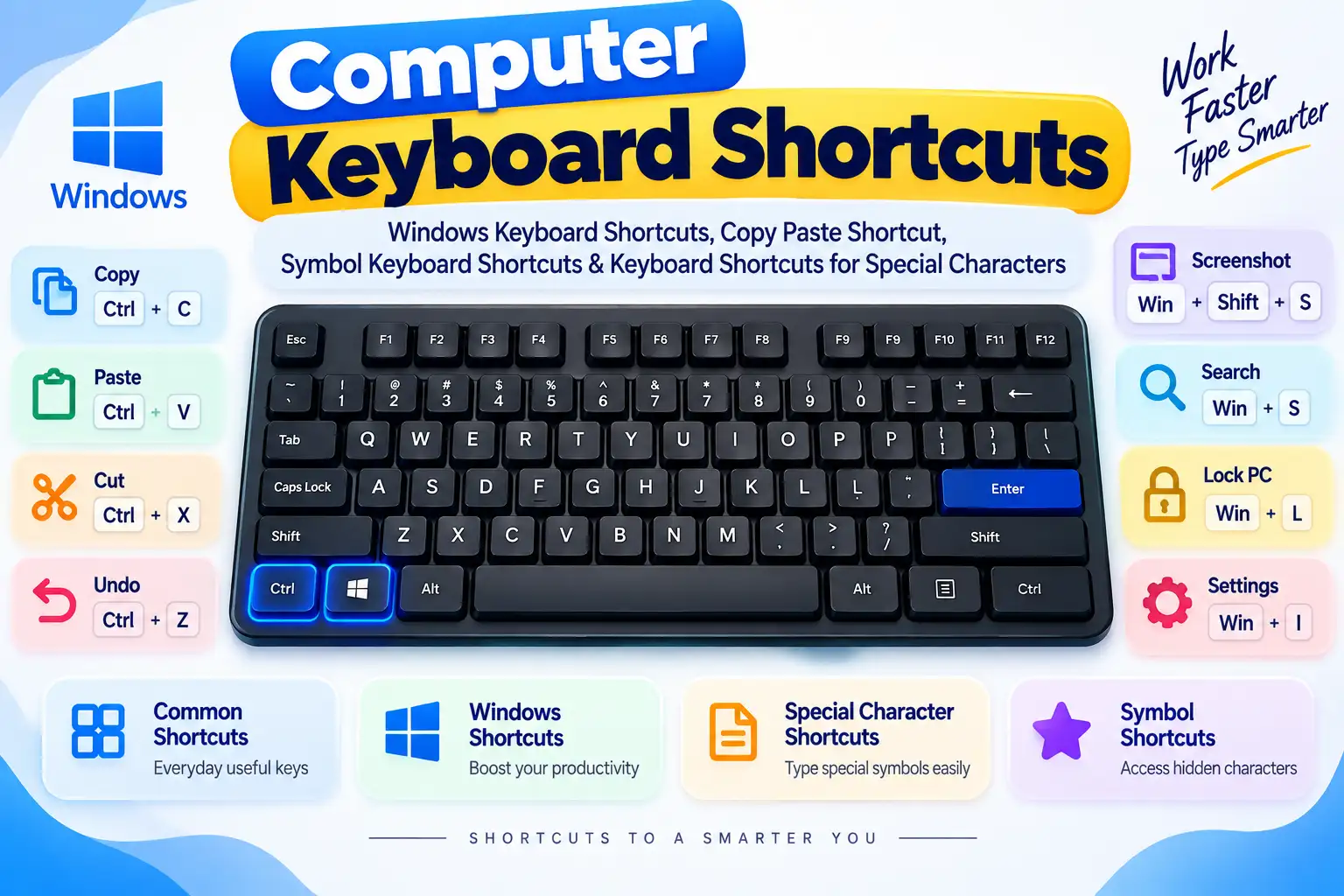
How to Type H with Accent (ĥ, ḣ, ḥ, ħ): Windows, Mac, Word & Mobile Shortcuts
Need to know how to type H with accent marks (ħ, ĥ, ḣ, ḥ, ḫ, ẖ, ɦ, Ħ, Ĥ, Ḣ, Ḥ) on your computer or phone? Use our 1-click copy chips below or follow our verified shortcuts for Windows Alt codes (Alt + 0295 / Alt + 0293), Mac Option keys (Option + 6 then h), Microsoft Word Unicode converter (0127 + Alt + X), Maltese H with stroke (h), Arabic and Sanskrit underdot ?, Esperanto h, Lakota ?, and our complete A to Z accent letters directory.
CLICK TO COPY H WITH ACCENTS INSTANTLY
Unicode: U+0127•Windows: Alt + 0295•Word: 0127 + Alt + X•Mac: Hold h (menu #2)•HTML: ħ
The consonant H carries diacritical modifications in Maltese national orthography, Semitic and Arabic transliteration, Sanskrit IAST romanization, Esperanto, and Native American languages like Lakota. Below is your complete cross-platform reference table:
Character & Accent Name
Glyph
Windows Alt Code
Word Shortcut
Mac Shortcut
Language / Usage
Unicode / HTML
H with Stroke (Bar)
h / H
Alt+0295 / Alt+0294
Type 0127 then Alt+X
Hold h (2) / Character Viewer
Maltese pharyngeal fricative
U+0127 | ħ
H with Circumflex
h / H
Alt+0293 / Alt+0292
Type 0125 then Alt+X
Hold h (1) / Opt+6, h
Esperanto velar fricative
U+0125 | ĥ
H with Dot Below
ḥ / ḥ
Alt+7717 / Alt+7716
Type 1E25 then Alt+X
Hold h (3) / Opt+., h
Arabic ?a, Sanskrit Visarga
U+1E25 | ḥ
H with Dot Above
ḣ / ḣ
Alt+7715 / Alt+7714
Type 1E23 then Alt+X
Opt+w then h (ABC Ext)
Classical Irish Gaelic
U+1E23 | ḣ
H with Breve Below
ḫ / ḫ
Alt+7723 / Alt+7722
Type 1E2B then Alt+X
Character Viewer
Arabic Kha, Egyptian, Akkadian
U+1E2B | ḫ
H with Line Below
ẖ
Type 1E96 then Alt+X
Type 1E96 then Alt+X
Character Viewer
Biblical Hebrew transliteration
U+1E96 | ẖ
H with Caron (Hácek)
ȟ / ȟ
Alt+0543 / Alt+0542
Type 021F then Alt+X
Opt+v then h (ABC Ext)
Lakota, Siouan languages
U+021F | ȟ
WINDOWS OS
How to Type H with Accent on Windows (5 Methods)
Windows personal computers offer multiple hardware and software pathways to insert H with accent marks:
Method 1: Windows Alt Codes (Numeric Keypad)
Using the separate 10-key numeric keypad on the right side of your keyboard, hold down the Alt key and type the 4-digit code:
h (Maltese Stroke):Alt + 0295 | H (Capital):Alt + 0294
h (Circumflex):Alt + 0293 | H (Capital):Alt + 0292
How to Type H with Accent on iPhone, iPad & Android
iOS (Apple iPhone and iPad)
Press and hold down the letter h on the virtual touchscreen keyboard.
A horizontal bubble menu will appear displaying: ĥ, ħ, and ḥ.
Slide your finger to the accent you need and lift to insert. For capital accented H, tap Shift first, then press and hold H.
Android (Google Gboard & Samsung Keyboard)
On Gboard and Samsung keyboards, press and hold down the h key.
Slide your thumb across the popup row to select your accented letter.
LINGUISTIC & GRAMMAR RULES
Linguistic, Historical & Grammatical Significance of H-Accent Marks
The diacritical marks associated with the letter H represent fascinating phonetic contrasts in Semitic, Indic, Celtic, and indigenous American languages:
Maltese: The Voiceless Pharyngeal Fricative (h / H)
Maltese is the only Semitic language officially written in the Latin alphabet. Its treatment of the letter H is central to its phonological structure:
Silent Plain H vs Pharyngeal Barred H: In standard modern Maltese, unadorned h is completely silent in pronunciation (it functions purely to lengthen vowels or in historical orthography). In contrast, h (H with stroke / bar, called he) represents the voiceless pharyngeal fricative (/h/, identical to Arabic ?).
Common Maltese Vocabulary: Found in essential Maltese words such as hobz ("bread"), hut ("fish"), habib ("friend"), hafna ("many"), hadid ("iron"), and helu ("sweet").
Arabic & Semitic Transliteration: Underdot (Ḥ / ḥ) and Breve Below (Ḫ / ḫ)
In academic Arabic romanization standards (such as DMG, DIN 31635, and ALA-LC):
H with Dot Below (ĥ): Transliterates the voiceless pharyngeal fricative letter Ḥāʼ (ح /h/), as in Muḥammad, ḥalāl, ṣalāh, baḥr ("sea").
H with Breve Below (ḫ) or Line Below (ĥ): Transliterates the voiceless velar/uvular fricative letter Khāʼ (خ /x/ or /χ/, pronounced like 'ch' in Scottish loch or German Bach), as in Šayḫ / Sheikh, Ḫalīl.
Sanskrit & Indic IAST Romanization: The Visarga (Ḥ / ḥ)
In the International Alphabet of Sanskrit Transliteration (IAST):
Visarga Phonetics: The underdot letter ḥ represents the Sanskrit visarga (ः), an unvoiced glottal allophone /h/ that produces a subtle voiceless echo of the preceding vowel.
Examples in Sacred Texts: Appears in classical Sanskrit terminology such as du?kha ("suffering / sorrow"), nama? ("salutations / reverence"), asva? ("horse"), and om namo bhagavate vasudevaya nama?.
Esperanto: The Circumflex H (h / H)
In Esperanto orthography, h represents the voiceless velar fricative /x/:
Usage: Contrasts with standard glottal h /h/ (e.g. haro "hair"). Examples: haoso ("chaos"), horo ("choir"), eho ("echo"), monaho ("monk").
Native American Lakota: The Caron H (Ȟ / ȟ)
In the Siouan language of the Lakota people (Sioux), ȟ represents the voiceless uvular fricative /χ/ (a guttural sound produced at the back of the throat, as in ȟé "mountain ridge").
Phonetic Contrast Analysis: Pharyngeal /h/ vs Glottal /h/ vs Velar /x/
To master typing and pronouncing accented H characters across international linguistics, it helps to understand their distinct vocal tract articulations:
Glottal Fricative (/h/ — Standard H): Produced deep in the vocal cords without oral obstruction (e.g. English house, German Haus). In modern Romance languages (French, Spanish, Italian) and modern Maltese, this sound has disappeared or become completely silent.
Voiceless Pharyngeal Fricative (/h/ — Maltese h / Arabic ?): Articulated by constricting the pharynx (throat wall) against the root of the tongue, producing a sharp, breathy, raspy whisper (e.g. Maltese hobz "bread", Arabic ?abib "friend / beloved").
Voiceless Velar/Uvular Fricative (/x/ or /χ/ — Esperanto ĥ / Arabic ḫ / Lakota ȟ): Articulated by raising the back of the tongue against the soft palate (velum) or uvula, producing a rough scrape (like 'ch' in German Bach, Scottish loch, or Russian хлеб).
Software Engineering & Database Collation for Accented H
When processing Maltese, Arabic, and Sanskrit accented H characters in software applications, search engines, and relational databases:
Maltese Alphabetical Collation: In Maltese collation (utf8mb4_maltese_ci), h is treated as a distinct independent letter situated between h and i (e.g. sorting order: g, gh, h, h, i, ie, j). Ensure your database collations do not merge h and h as identical characters.
URL Slugification Best Practices: In search engine friendly URLs, transliterate h → h (e.g. /hamrun/ → /hamrun/) or ch (for ħ), while maintaining authentic UTF-8 glyphs in Open Graph metadata and Schema.org markup.
For software developers, web designers, database architects, and LaTeX typesetters, below is the complete technical character specification for all H-accent variations:
Character
Unicode Code Point
HTML Named Entity
HTML Decimal / Hex
CSS Escape
JavaScript / Python
h (Lowercase Stroke)
U+0127
None
ħ / ħ
\0127
"\u0127"
H (Capital Stroke)
U+0126
None
Ħ / Ħ
\0126
"\u0126"
h (Lowercase Circumflex)
U+0125
ĥ
ĥ / ĥ
\0125
"\u0125"
H (Capital Circumflex)
U+0124
Ĥ
Ĥ / Ĥ
\0124
"\u0124"
ḥ (Lowercase Dot Below)
U+1E25
None
ḥ / ḥ
\1E25
"\u1E25"
Ḥ (Capital Dot Below)
U+1E24
None
Ḥ / Ḥ
\1E24
"\u1E24"
ḣ (Lowercase Dot Above)
U+1E23
None
ḣ / ḣ
\1E23
"\u1E23"
ḫ (Lowercase Breve Below)
U+1E2B
None
ḫ / ḫ
\1E2B
"\u1E2B"
ẖ (Lowercase Line Below)
U+1E96
None
ẖ / ẖ
\1E96
"\u1E96"
ȟ (Lowercase Caron)
U+021F
None
ȟ / ȟ
\021F
"\u021F"
Visual Guide: Typing accented H letters, Alt codes, and dead key shortcuts across all platforms
FREQUENTLY ASKED QUESTIONS
Frequently Asked Questions About Typing H with Accents
The Alt code for h (Maltese H with stroke) is Alt + 0295, and for capital H it is Alt + 0294. For h (H with circumflex), use Alt + 0293 (capital H: Alt + 0292). For ḥ (H with dot below), use Alt + 7717 (capital Ḥ: Alt + 7716). For ḣ (H with dot above), use Alt + 7715.
On macOS, press and hold the h key on your keyboard until the diacritics menu appears, then press 1 for h, 2 for h, or 3 for ?. With the ABC Extended input source enabled, press Option + 6 then h for h, or Option + . then h for ḥ.
In Microsoft Word on Windows, type the hexadecimal code 0127 and immediately press Alt + X to convert it to h. For h, type 0125 and press Alt + X. For ḥ, type 1E25 and press Alt + X. For ḣ, type 1E23 and press Alt + X. For capital H, type 0126 and press Alt + X.
In the Maltese alphabet, the letter h (called he) represents the voiceless pharyngeal fricative (/h/, identical to Arabic ?). It contrasts with standard uncrossed h, which is completely silent in modern Maltese. Examples include hobz 'bread', hut 'fish', and habib 'friend'.
In Arabic romanization (DMG/ALA-LC), ḥ represents the voiceless pharyngeal fricative letter Ḥāʼ (ح /h/). In Sanskrit IAST romanization, ḥ represents the visarga (ः), an unvoiced glottal echo sound found in words like duḥkha 'suffering' and namaḥ 'salutations'.
In Esperanto, h represents the voiceless velar fricative /x/ (like 'ch' in German Bach or Scottish loch), found in words like haoso 'chaos', horo 'choir', and eho 'echo', contrasting with standard glottal h /h/.
For h use ħ (U+0127); for H use Ħ (U+0126); for h use ĥ (U+0125); for H use Ĥ (U+0124); for ḥ use ḥ (U+1E25); for Ḥ use Ḥ (U+1E24); for ḣ use ḣ (U+1E23); for ḫ use ḫ (U+1E2B); for ȟ use ȟ (U+021F).
On both iOS and Android touchscreen keyboards, press and hold down the letter h (or capital H). A popup bubble displaying ĥ, ħ, and ḥ will appear. Slide your finger across to the desired accent and release.
A TO Z ACCENT LETTERS & DIACRITICS DIRECTORY
A to Z Accent Letters Hub & Related Diacritics Guides
Need to type other accented letters, umlauts, tildes, cedillas, or special characters? Explore our dedicated accent directories and interactive typing tools below: