How to Type J with Accent (ĵ, ǰ): Windows, Mac, Word & Mobile Shortcuts
Need to know how to type J with accent marks (ĵ, Ĵ, ǰ, ȷ, ɉ, ɟ, j́) on your computer or phone? Use our 1-click copy chips below or follow our verified shortcuts for Windows Alt codes (Alt + 0309 / Alt + 0496), Mac Option keys (Option + 6 then j), Microsoft Word Unicode converter (0135 + Alt + X), Esperanto j, dotless j ?, caron j, stroke ?, and our complete A to Z accent letters directory.
CLICK TO COPY J WITH ACCENTS INSTANTLY
Unicode: U+0135•Windows: Alt + 0309•Word: 0135 + Alt + X•Mac: Option + 6, j•HTML: ĵ
The letter J with diacritical marks plays a prominent phonetic role in Esperanto (j), phonetic linguistics (ǰ, ȷ), mathematics, and indigenous languages of the Americas (ɉ). Below is your complete cross-platform reference table:
Character & Accent Name
Glyph
Windows Alt Code
Word Shortcut
Mac Shortcut
Language / Usage
Unicode / HTML
J with Circumflex
j / J
Alt+0309 / Alt+0308
Type 0135 then Alt+X
Opt+6, then j (ABC Ext)
Esperanto voiced fricative /?/
U+0135 | ĵ
Dotless J with Caron
j
Alt+0496
Type 01F0 then Alt+X
Opt+v, then j (ABC Ext)
IPA, Cyrillic & Armenian transliteration
U+01F0 | ǰ
Dotless J
ȷ
Alt+0567
Type 0237 then Alt+X
Character Viewer / Math Symbols
Mathematics, vector calculus
U+0237 | ȷ
J with Stroke (Bar)
ɉ / ɉ
Alt+0585 / Alt+0584
Type 0249 then Alt+X
Character Viewer
Arhuaco (Ik?) of Colombia
U+0249 | ɉ
J with Acute
j´
Type 006A then 0301Alt+X
Type 006A then 0301Alt+X
Opt+e, then j (ABC Ext)
Dutch diphthongs (íj´), tone marking
U+006A+0301
WINDOWS OS
How to Type J with Accent on Windows (5 Methods)
Windows personal computers offer multiple hardware and software pathways to insert J with accent marks:
Method 1: Windows Alt Codes (Numeric Keypad)
Using the separate 10-key numeric keypad on the right side of your keyboard, hold down the Alt key and type the 4-digit code:
Method 2: Microsoft Word Unicode Hex Converter (Alt + X)
In any modern version of Microsoft Word, WordPad, or LibreOffice Writer on Windows:
1
Circumflex (j): Type 0135 and immediately press Alt + X → converts to j. (For capital J: type 0134 + Alt + X).
2
Caron (j): Type 01F0 and immediately press Alt + X → converts to j.
3
Dotless J (ȷ): Type 0237 and immediately press Alt + X → converts to ȷ.
4
Stroke (ɉ): Type 0249 and immediately press Alt + X → converts to ȷ.
Method 3: Windows Emoji & Symbol Panel (Win + .)
Press Win + . (Windows Key + Period) or Win + ;.
Click the Symbols (Ω) icon at the top → navigate to Latin Symbols → click j or j.
APPLE MACOS
How to Type J with Accent on Mac (macOS)
Apple macOS provides native press-and-hold menus and ABC Extended dead keys for J accents:
Method 1: ABC Extended Keyboard Input
If you enable the ABC - Extended layout in macOS System Settings → Keyboard → Input Sources:
Circumflex (j): Press Option + 6, release, then press j → gives j. (Capital J: Option + 6, then Shift + J).
Caron (j): Press Option + v, release, then press j → gives j.
Acute (j´): Press Option + e, release, then press j → gives j´.
Method 2: Press-and-Hold Accent Menu (Built-in on macOS)
On a Mac keyboard, press and hold down the letter j (or Shift + j for capital). When the diacritics bubble appears, press the corresponding number or click j.
Method 3: macOS Character Viewer (Ctrl + Cmd + Space)
Press Ctrl + Cmd + Space to open Character Viewer.
Search for j circumflex or dotless j, then double-click ĵ or ȷ.
OFFICE SUITE
How to Type J with Accent in Microsoft Word, PowerPoint & Excel
Microsoft Word Shortcuts
j (Circumflex): Type 0135 then press Alt + X. For capital J: type 0134 + Alt + X.
j (Caron): Type 01F0 then press Alt + X.
ȷ (Dotless J): Type 0237 then press Alt + X.
ɉ (Stroke): Type 0249 then press Alt + X.
Microsoft Excel Formulas
In Excel spreadsheets and formulas, dynamically output J-accent characters using UNICHAR:
=UNICHAR(309) outputs j | =UNICHAR(308) outputs J
=UNICHAR(496) outputs j | =UNICHAR(567) outputs ȷ
=UNICHAR(585) outputs ɉ | =UNICHAR(584) outputs Ɉ
MOBILE DEVICES
How to Type J with Accent on iPhone, iPad & Android
iOS (Apple iPhone and iPad)
Press and hold down the letter j on the virtual touchscreen keyboard.
A popup bubble displaying j will appear. Slide your finger across and lift to insert.
Android (Google Gboard & Samsung Keyboard)
On Gboard and Samsung keyboards, press and hold down the j key.
Slide your thumb across the popup row to select j.
LINGUISTIC & GRAMMAR RULES
Linguistic, Historical & Grammatical Significance of J-Accent Marks
While the letter J is one of the youngest additions to the Latin alphabet (originating as a variant of 'I' in the 16th century), accented forms of J play distinct roles in international languages, phonetics, and mathematical notation:
Esperanto: The Voiced Postalveolar Fricative (j / J)
In Esperanto orthography (created by L. L. Zamenhof in 1887), the distinction between standard j and accented j is fundamental:
Standard Unadorned J (/j/): Represents the palatal approximant semivowel (identical to English 'y' in yes or German 'j' in ja), as in jes ("yes"), kaj ("and"), bonan tagon ("good day"), and plural endings (libroj "books").
Circumflex J (/?/): Represents the voiced postalveolar fricative (identical to 's' in English measure / pleasure, 'g' in French journal, or 'zh' in Russian transliteration έψιλον).
Essential Esperanto Vocabulary: Found in jurnalo ("newspaper / journal"), jaudo ("Thursday"), ajoj ("things / items"), jeti ("to throw"), plago ("beach"), lego ("law"), and jaluzo ("jealousy").
Linguistic Romanization: Dotless J with Caron (j)
In formal linguistic transliteration systems:
ISO 9 Cyrillic & Uralic Phonetic Alphabet: The letter j represents the voiced postalveolar affricate /d?/ (equivalent to English 'j' in judge).
Armenian Romanization: Transliterates the 27th letter of the Armenian alphabet, ? (je /d?/).
Typographical Collision Prevention: The dot of the lowercase 'j' is purposefully eliminated so that the wedge (caron / hácek) sits cleanly on the vertical stem without colliding with the tittle dot.
Physics & Vector Mathematics: The Dotless J (ȷ)
In physics, mathematics, and vector calculus:
Unit Vectors in 3D Coordinate Systems: In three-dimensional Cartesian space, the standard unit vectors along the x, y, and z axes are denoted as $hat{imath}$, $hat{jmath}$, and $hat{k}$. Using the dotless glyphs $imath$ (U+0131) and $jmath$ (U+0237) ensures that the circumflex "hat" diacritic or vector arrow does not clash with the dot of the letter.
Indigenous Languages: J with Stroke (Ɉ / ɟ)
In the Arhuaco (Ikʉ) language of the Chibchan language family spoken in the Sierra Nevada de Santa Marta in northern Colombia, ɉ represents a distinct voiceless palatal consonant phoneme.
Dutch Digraph Stress: The Accented IJ Diphthong (í/j´ — ?)
In Dutch orthography, the letter combination ij is considered a distinct ligated vowel or digraph representing the diphthong /?i/:
Parallel Accentuation Rule: When emphasizing or adding tonic acute accents to words with the ij digraph, Dutch spelling rules mandate that both letters must receive an acute accent (e.g. blíjf "stay!", vándáág of mórgen, íjzer "iron").
Typographical Rendering: Because standard Unicode does not contain a precomposed single character for j acute, typographers combine lowercase j (U+006A) with the combining acute accent (U+0301) yielding j´, paired with í to write íj´.
Software Engineering & Database Collation for Accented J
When processing Esperanto text, scientific notation, and phonetic transcriptions in software applications and relational databases:
Esperanto Alphabetical Sorting: In Esperanto collation (utf8mb4_esperanto_ci), j is treated as an independent letter sorting immediately after standard j (e.g. i, j, j, k, l, m). Ensure your database queries adhere to international Esperanto collation tables.
URL Slug Transliteration: In search engine friendly URLs, transliterate j → jh (the traditional Esperanto H-system), jx (the X-system), or simply j / zh depending on your site's internationalization policy.
Historical Evolution: From Roman I-Swash to Distinct Consonant J
Understanding the origin of the letter J explains why it has fewer natural diacritical forms in Romance languages compared to vowels like A, E, and I:
The Roman Numeral Swash: In classical Latin, there was no separate letter 'J'; the letter 'I' served as both vowel /i/ and semivowel /j/. Scribes in medieval Europe began extending the final 'i' in Roman numerals with a long downward tail or swash to prevent fraudulent alteration (e.g. writing viij instead of viii).
Gian Giorgio Trissino's Orthographic Revolution (1524): Italian humanist and grammarian Gian Giorgio Trissino formally distinguished between vowel 'I' and consonant 'J' in his published treatise De le lettere nuovamente aggiunte ne la lingua italiana.
Why J Rarely Takes Traditional Romance Diacritics: Because J was established specifically as a consonant representing a glide or fricative, Western European languages rarely needed accent marks like acute or grave on 'j'. Instead, artificial languages (Esperanto) and specialized phonetic transcription alphabets (IPA, ISO 9, UPA) adopted circumflex (j), caron (j), and bar/stroke (ɉ) to represent distinct postalveolar and palatal phonemes.
For software developers, web designers, database architects, and LaTeX typesetters, below is the complete technical character specification for all J-accent variations:
Character
Unicode Code Point
HTML Named Entity
HTML Decimal / Hex
CSS Escape
JavaScript / Python
j (Lowercase Circumflex)
U+0135
ĵ
ĵ / ĵ
\0135
"\u0135"
J (Capital Circumflex)
U+0134
Ĵ
Ĵ / Ĵ
\0134
"\u0134"
j (Dotless J with Caron)
U+01F0
None
ǰ / ǰ
\01F0
"\u01F0"
ȷ (Dotless Lowercase J)
U+0237
None
ȷ / ȷ
\0237
"\u0237"
ɉ (Lowercase Stroke)
U+0249
None
ɉ / ɉ
\0249
"\u0249"
Ɉ (Capital Stroke)
U+0248
None
Ɉ / Ɉ
\0248
"\u0248"
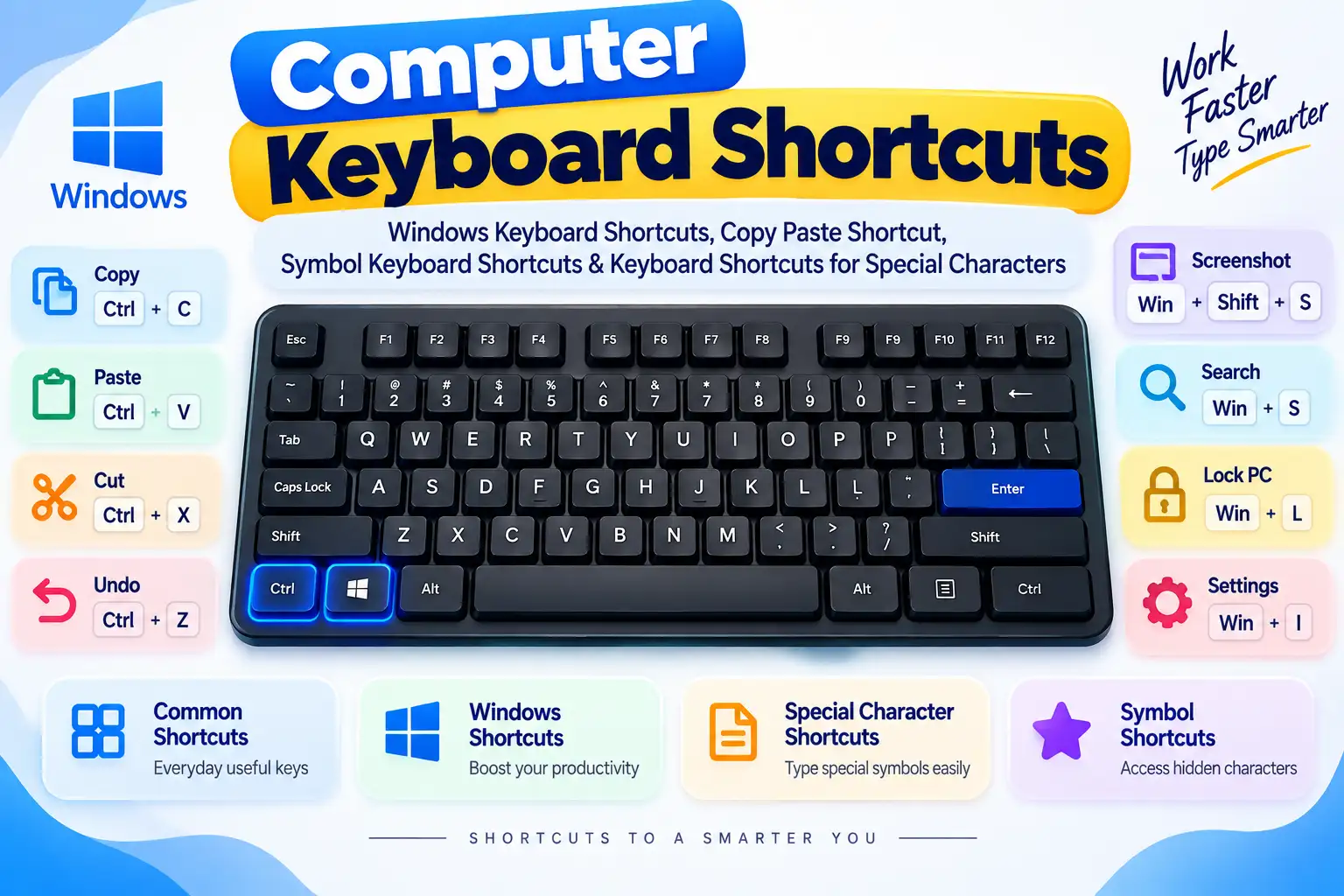
Visual Guide: Typing accented J letters, Alt codes, and dead key shortcuts across all platforms
FREQUENTLY ASKED QUESTIONS
Frequently Asked Questions About Typing J with Accents
The Alt code for j (J with circumflex) is Alt + 0309, and for capital J it is Alt + 0308. For j (dotless J with caron), use Alt + 0496. For ȷ (dotless J), use Alt + 0567. For ɉ (J with stroke), use Alt + 0585.
On macOS with the ABC Extended input source enabled, press Option + 6, release, then press j to get j. For j (caron), press Option + v then j. Alternatively, press and hold the j key on your keyboard to reveal the diacritics popup menu.
In Microsoft Word on Windows, type the hexadecimal code 0135 and immediately press Alt + X to convert it to j. For capital J, type 0134 and press Alt + X. For j, type 01F0 and press Alt + X. For dotless ȷ, type 0237 and press Alt + X.
In the planned international language Esperanto, j represents the voiced postalveolar fricative /?/ (pronounced like 's' in measure or 'g' in French journal). It contrasts with standard unaccented j, which represents the palatal approximant /j/ (like 'y' in yes). Common words include jurnalo 'newspaper', jaudo 'Thursday', ajoj 'things', and jeti 'to throw'.
The character j (Unicode U+01F0) is a lowercase j with its dot removed so that a caron (hácek) accent can sit cleanly above the letter stem without collision. It is used in the International Phonetic Alphabet (IPA), Uralic Phonetic Alphabet (UPA), ISO 9 Cyrillic transliteration, and Armenian romanization to represent the voiced postalveolar affricate /d?/ (like English 'j' in judge).
In mathematics, vector calculus, and physics, the dotless j (ȷ, U+0237) is used as a base character when adding top diacritics such as vector hats (ȷ̂) or vector arrows (ȷ⃗). Removing the dot prevents visual clutter and ensures the vector diacritic is clearly legible.
For j use ĵ (U+0135); for J use Ĵ (U+0134); for j use ǰ (U+01F0); for ȷ use ȷ (U+0237); for ɉ use ɉ (U+0249); for Ɉ use Ɉ (U+0248).
On both iOS and Android touchscreen keyboards, press and hold down the letter j (or capital J). A popup bubble displaying j will appear. Slide your finger across to select it and release.
A TO Z ACCENT LETTERS & DIACRITICS DIRECTORY
A to Z Accent Letters Hub & Related Diacritics Guides
Need to type other accented letters, umlauts, tildes, cedillas, or special characters? Explore our dedicated accent directories and interactive typing tools below: