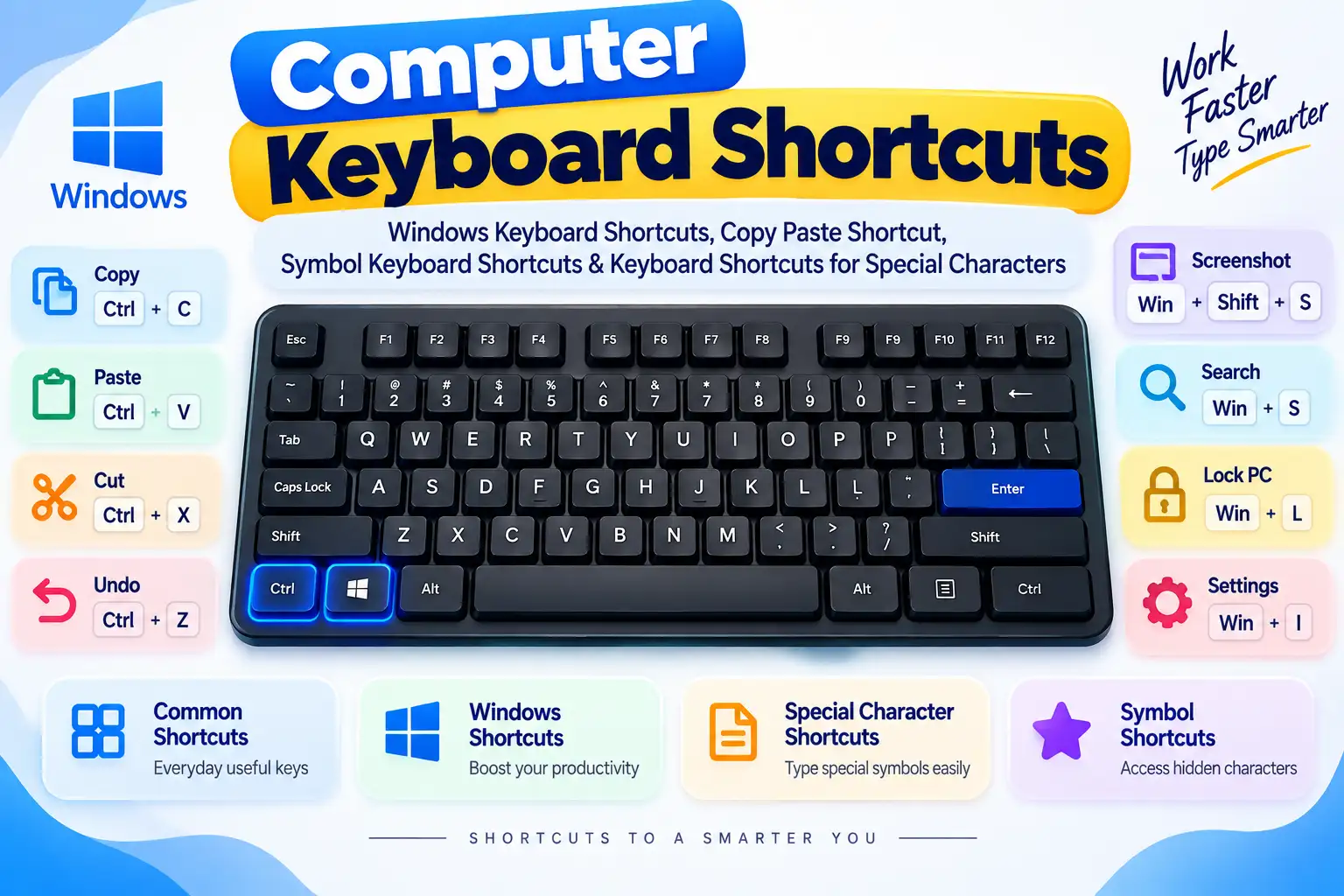
How to Type O with Accent (ó, ò, ô, ö, õ, ø): Windows, Mac, Word & Mobile Shortcuts
Looking for how to type O with accent marks (ó, ò, ô, ö, õ, ø, o, o, o, Ó, Ò, Ô, Ö, Õ, Ø, O, O, O) on your computer or smartphone? Use our 1-click copy buttons below or follow our verified shortcuts for Windows Alt codes (Alt + 162 / Alt + 149 / Alt + 147 / Alt + 148), Mac Option dead keys (Option + e, o), Microsoft Word shortcuts (Ctrl+', o or 00F3 + Alt + X), Spanish ó, Italian ò, French ô, German ö, Portuguese õ, Scandinavian ø, and our complete A to Z accent letters directory.
CLICK TO COPY O WITH ACCENTS INSTANTLY
Unicode: U+00F3•Windows: Alt + 162 / 0243•Word: 00F3 + Alt + X•Mac: Option + e, o•HTML: ó
The letter O is one of the most versatile accented vowels in global typography, featuring in Spanish (ó), Italian (ò), French (ô), German (ö), Portuguese (õ), Danish/Norwegian (ø), Japanese (o), Hungarian (o), and Vietnamese (o). Below is your complete cross-platform reference matrix:
Character & Accent Name
Glyph
Windows Alt Code
Word Shortcut
Mac Shortcut
Primary Languages
Unicode / HTML
O with Acute
ó / Ó
Alt+162 (0243) / Alt+0211
Ctrl+', o
Opt+e, then o
Spanish, Portuguese, Irish, Polish
U+00F3 | ó
O with Grave
ò / Ò
Alt+149 (0242) / Alt+0210
Ctrl+`, o
Opt+`, then o
Italian (però), French, Catalan
U+00F2 | ò
O with Circumflex
ô / Ô
Alt+147 (0244) / Alt+0212
Ctrl+Shift+^, o
Opt+i, then o
French (hôpital), Portuguese, Vietnamese
U+00F4 | ô
O with Umlaut (Diaeresis)
ö / Ö
Alt+148 (0246) / Alt+0214
Ctrl+Shift+:, o
Opt+u, then o
German (schön), Swedish, Turkish
U+00F6 | ö
O with Tilde
õ / Õ
Alt+0245 / Alt+0213
Ctrl+Shift+~, o
Opt+n, then o
Portuguese (corações), Estonian
U+00F5 | õ
O with Slash / Stroke
ø / Ø
Alt+0248 / Alt+0216
Ctrl+/, o
Opt+o
Danish, Norwegian, Faroese (København)
U+00F8 | ø
O with Macron
o / O
Alt+0333 / Alt+0332
Type 014D then Alt+X
Opt+a, then o (ABC Ext)
Japanese Romaji (Tokyo), Hawaiian
U+014D | ō
O with Double Acute
o / O
Alt+0337 / Alt+0336
Type 0151 then Alt+X
Character Viewer / ABC Extended
Hungarian long umlaut (no, erdo)
U+0151 | ő
O with Horn
o / O
Alt+0417 / Alt+0416
Type 01A1 then Alt+X
Character Viewer / Vietnamese Telex
Vietnamese unrounded vowel (ph?)
U+01A1 | ơ
WINDOWS OS
How to Type O with Accent on Windows (5 Methods)
Windows personal computers offer multiple hardware and software pathways to insert O with accent marks:
Method 1: Windows Alt Codes (Numeric Keypad)
Using the separate 10-key numeric keypad on the right side of your keyboard (ensure Num Lock is active), hold down the Alt key and type the numerical code:
ó (Acute):Alt + 162 or Alt + 0243 | Ó (Capital):Alt + 0211
ò (Grave):Alt + 149 or Alt + 0242 | Ò (Capital):Alt + 0210
ô (Circumflex):Alt + 147 or Alt + 0244 | Ô (Capital):Alt + 0212
ö (Umlaut):Alt + 148 or Alt + 0246 | Ö (Capital):Alt + 0214
õ (Tilde):Alt + 0245 | Õ (Capital):Alt + 0213
ø (Slash):Alt + 0248 | Ø (Capital):Alt + 0216
o (Macron):Alt + 0333 | O (Capital):Alt + 0332
o (Double Acute):Alt + 0337 | O (Capital):Alt + 0336
o (Horn):Alt + 0417 | O (Capital):Alt + 0416
Method 2: US-International Keyboard Layout
If you enable the United States-International layout in Windows Settings → Time & Language → Language & Region:
Acute (ó): Press ' (Single Quote), then press o → gives ó. (Or press Right Alt + O).
Grave (ò): Press ` (Grave / Backtick), then press o → gives ò.
Circumflex (ô): Press ^ (Shift + 6), then press o → gives ô.
Umlaut (ö): Press " (Shift + '), then press o → gives ö.
Tilde (õ): Press ~ (Shift + grave), then press o → gives õ.
Slashed O (ø): Press Right Alt + L → gives ø.
Method 3: Microsoft Word Unicode Hex Converter (Alt + X)
In any modern version of Microsoft Word, WordPad, or LibreOffice Writer on Windows:
1
Acute (ó): Type 00F3 and immediately press Alt + X → converts to ó. (Capital Ó: type 00D3 + Alt + X).
2
Grave (ò): Type 00F2 and immediately press Alt + X → converts to ò. (Capital Ò: 00D2 + Alt + X).
3
Circumflex (ô): Type 00F4 and immediately press Alt + X → converts to ô. (Capital Ô: 00D4 + Alt + X).
4
Umlaut (ö): Type 00F6 and immediately press Alt + X → converts to ö. (Capital Ö: 00D6 + Alt + X).
5
Tilde (õ): Type 00F5 and immediately press Alt + X → converts to õ. (Capital Õ: 00D5 + Alt + X).
6
Macron (o): Type 014D and immediately press Alt + X → converts to o.
Method 4: Windows Emoji & Symbol Panel (Win + .)
Press Win + . (Windows Key + Period) or Win + ;.
Click the Symbols (Ω) icon at the top → navigate to Latin Symbols → click ó, ò, ô, ö, or õ.
APPLE MACOS
How to Type O with Accent on Mac (macOS)
Apple macOS provides native press-and-hold menus and Option dead key shortcuts for O accents:
Method 1: Native macOS Option Key Dead Key Shortcuts
Acute (ó): Press Option + e, release both keys, then press o → gives ó. (For capital Ó: press Option + e, then Shift + O).
Grave (ò): Press Option + ` (grave), release, then press o → gives ò.
Circumflex (ô): Press Option + i, release, then press o → gives ô.
Umlaut (ö): Press Option + u, release, then press o → gives ö.
Tilde (õ): Press Option + n, release, then press o → gives õ.
Slashed O (ø): Press Option + o → gives ø. (Capital Ø: press Option + Shift + O).
Macron (o): In ABC Extended, press Option + a, release, then press o → gives o.
Method 2: Press-and-Hold Accent Menu (Built-in on macOS)
On a Mac keyboard, press and hold down the letter o (or Shift + o for capital). When the diacritics bubble appears, press the corresponding number:
Press 1 for ó
Press 2 for ö
Press 3 for ô
Press 4 for ò
Press 5 for õ
Press 6 for ø
Press 7 for o
Method 3: macOS Character Viewer (Ctrl + Cmd + Space)
Press Ctrl + Cmd + Space to open Character Viewer.
Search for o acute or o umlaut, then double-click ó or ö.
OFFICE SUITE
How to Type O with Accent in Microsoft Word, PowerPoint & Excel
Microsoft Word Dedicated Key Combinations
Acute (ó): Press Ctrl + ' (single quote), release, then press o → gives ó. (Capital Ó: press Ctrl + ', then Shift + O).
Grave (ò): Press Ctrl + ` (grave), release, then press o → gives ò.
Circumflex (ô): Press Ctrl + Shift + ^, release, then press o → gives ô.
Umlaut (ö): Press Ctrl + Shift + : (colon), release, then press o → gives ö.
Tilde (õ): Press Ctrl + Shift + ~ (tilde), release, then press o → gives õ.
Slash (ø): Press Ctrl + /, release, then press o → gives ø.
Microsoft Excel Formulas
In Excel spreadsheets and formulas, dynamically output O-accent characters using UNICHAR:
=UNICHAR(243) outputs ó | =UNICHAR(211) outputs Ó
=UNICHAR(242) outputs ò | =UNICHAR(210) outputs Ò
=UNICHAR(244) outputs ô | =UNICHAR(212) outputs Ô
=UNICHAR(246) outputs ö | =UNICHAR(214) outputs Ö
=UNICHAR(245) outputs õ | =UNICHAR(213) outputs Õ
=UNICHAR(248) outputs ø | =UNICHAR(216) outputs Ø
=UNICHAR(333) outputs o | =UNICHAR(337) outputs o
MOBILE DEVICES
How to Type O with Accent on iPhone, iPad & Android
iOS (Apple iPhone and iPad)
Press and hold down the letter o on the virtual touchscreen keyboard.
A popup bubble displaying ó, ò, ô, ö, õ, ø, o, and œ will appear. Slide your finger to select and lift.
Android (Google Gboard & Samsung Keyboard)
On Gboard and Samsung keyboards, press and hold down the o key.
Slide your thumb across the popup row to select ó, ö, ò, ô, or õ.
LINGUISTIC & GRAMMAR RULES
Linguistic, Historical & Grammatical Significance of O-Accent Marks
The letter O with diacritics represents critical phonetic contrasts across major global language families:
Spanish, Portuguese & Polish: O with Acute (ó / Ó)
In Romance and Slavic languages:
Spanish Tonic Stress & Verb Tense Distinction: In Spanish, ó indicates irregular tonic syllable stress on oxytone (agudas) words ending in vowels, 'n', or 's' (e.g. adiós, camión, canción, corazón, león, nación, avión). It is vital for distinguishing verb tenses: habló ("he spoke", preterite) vs hablo ("I speak", present).
Irish Gaelic Síneadh Fada: In Irish (Gaeilge), the acute accent (síneadh fada) lengthens the vowel /o/ into long /o?/ (as in mór "big", bó "cow", óg "young", póg "kiss", lón "lunch").
Polish Vowel Shift: In Polish, ó historically represented long /o?/ that shifted into the close back vowel /u/ (identical in sound to u, as in Kraków, ogród "garden", król "king", Bóg "God", góra "mountain").
Italian & French: O with Grave (ò / Ò)
In Italian and Gallo-Romance linguistics:
Italian Open-Mid Vowel & Final Stress: Italian uses ò to represent the stressed open-mid back rounded vowel /?/ when it falls on the final syllable of a word (e.g. però "however", può "he can", ciò "this", farò "I will do", andò "he went").
Catalan & Scottish Gaelic: Also standard in Catalan (però, allò) and Scottish Gaelic (òr "gold", bò "cow").
French & Portuguese: O with Circumflex (ô / Ô)
In French and Portuguese orthography:
French Historical Elision of 's': In French, the circumflex over ô marks the historical loss of a following 's' from Old French and Latin, producing a lengthened close-mid [o] (e.g. hôpital from Latin hospitalis, hôtel from hostel, côte "coast" from coste, tôt from tost, arôme).
Portuguese Stressed Close-Mid Vowel: In Portuguese, ô indicates a stressed close-mid vowel /o/, distinguishing words like avô ("grandfather") from avó ("grandmother").
German, Swedish, Turkish & Finnish: O with Umlaut (ö / Ö)
In Germanic, Uralic, and Turkic languages:
German I-Mutation (Umlaut): In German, ö represents a front rounded close-mid [ø?] or open-mid [œ] vowel resulting from historical vowel harmony (e.g. schön "beautiful", König "king", hören "to hear", Österreich "Austria", möchten).
Nordic & Turkic Alphabets: Independent letter in Swedish, Finnish, Estonian, Hungarian, and Turkish (göz "eye", dört "four", köy "village").
Portuguese & Guaraní: O with Tilde (õ / Õ)
In Portuguese:
Nasal Vowel & Plural Nouns: Represents the nasalized close-mid vowel [õ] or nasal diphthong [õw~] in essential plural noun endings such as corações ("hearts"), nações ("nations"), limões ("lemons"), aviões ("airplanes"), and verbs like põe ("puts").
Danish, Norwegian & Faroese: O with Slash / Stroke (ø / Ø)
In North Germanic Scandinavian languages:
Independent Scandinavian Letter: The slashed ø is the 28th letter of the Danish and Norwegian alphabets representing [ø] / [œ] (as in København "Copenhagen", rød "red", blåbær, før "before", øl "beer", øst "east").
Japanese Romaji, Hawaiian & Maori: O with Macron (o / O)
In Asian and Polynesian linguistics:
Vowel Length: The macron indicates a prolonged vowel /o?/, essential in Hepburn Romaji (Tokyo, Kyoto, shogun, ronin), Hawaiian (?olelo "language", kokua "help"), and Maori (Maori, korero).
Hungarian (o / O) & Vietnamese (o / O)
Hungarian Double Acute (o / O): Represents a long front rounded vowel [ø?] (as in no "woman", erdo "forest", o "he/she").
Vietnamese Horn (o / O): Represents the unrounded mid-back vowel [ɤ] (as in phở, Việt Nam, thơ "poetry").
For software developers, web designers, database architects, and LaTeX typesetters, below is the complete technical character specification for all O-accent variations:
Character
Unicode Code Point
HTML Named Entity
HTML Decimal / Hex
CSS Escape
JavaScript / Python
ó (Lowercase Acute)
U+00F3
ó
ó / ó
\00F3
"\u00F3"
Ó (Capital Acute)
U+00D3
Ó
Ó / Ó
\00D3
"\u00D3"
ò (Lowercase Grave)
U+00F2
ò
ò / ò
\00F2
"\u00F2"
Ò (Capital Grave)
U+00D2
Ò
Ò / Ò
\00D2
"\u00D2"
ô (Lowercase Circumflex)
U+00F4
ô
ô / ô
\00F4
"\u00F4"
Ô (Capital Circumflex)
U+00D4
Ô
Ô / Ô
\00D4
"\u00D4"
ö (Lowercase Umlaut)
U+00F6
ö
ö / ö
\00F6
"\u00F6"
Ö (Capital Umlaut)
U+00D6
Ö
Ö / Ö
\00D6
"\u00D6"
õ (Lowercase Tilde)
U+00F5
õ
õ / õ
\00F5
"\u00F5"
Õ (Capital Tilde)
U+00D5
Õ
Õ / Õ
\00D5
"\u00D5"
ø (Lowercase Slashed O)
U+00F8
ø
ø / ø
\00F8
"\u00F8"
Ø (Capital Slashed O)
U+00D8
Ø
Ø / Ø
\00D8
"\u00D8"
o (Lowercase Macron)
U+014D
ō
ō / ō
\014D
"\u014D"
o (Double Acute)
U+0151
ő
ő / ő
\0151
"\u0151"
o (Horn)
U+01A1
None
ơ / ơ
\01A1
"\u01A1"
Visual Guide: Typing accented O letters, Alt codes, and dead key shortcuts across all platforms
FREQUENTLY ASKED QUESTIONS
Frequently Asked Questions About Typing O with Accents
The Alt codes for lowercase O accents are: ó (acute) = Alt + 162 or Alt + 0243; ò (grave) = Alt + 149 or Alt + 0242; ô (circumflex) = Alt + 147 or Alt + 0244; ö (umlaut) = Alt + 148 or Alt + 0246; õ (tilde) = Alt + 0245; ø (slashed O) = Alt + 0248; o (macron) = Alt + 0333; o (double acute) = Alt + 0337; o (horn) = Alt + 0417. For uppercase: Ó = Alt + 0211; Ò = Alt + 0210; Ô = Alt + 0212; Ö = Alt + 0214; Õ = Alt + 0213; Ø = Alt + 0216.
On macOS, use standard Option dead keys: press Option + e then o for ó; Option + ` then o for ò; Option + i then o for ô; Option + u then o for ö; Option + n then o for õ; Option + o for ø; Option + a then o for o. For capital letters, press Shift with the letter O. You can also hold down the o key on your keyboard to reveal the popup diacritics menu.
In Microsoft Word on Windows, press Ctrl + ' (single quote) then o for ó; Ctrl + ` (grave) then o for ò; Ctrl + Shift + ^ then o for ô; Ctrl + Shift + : (colon) then o for ö; Ctrl + Shift + ~ (tilde) then o for õ; Ctrl + / then o for ø. Alternatively, type the hexadecimal code 00F3 and immediately press Alt + X to convert it to ó (type 00D3 + Alt + X for capital Ó).
Both ö and ø represent front rounded vowels ([ø] and [œ]). The letter ö is used in German, Swedish, Finnish, Estonian, Hungarian, and Turkish, while ø is an independent letter of the alphabet in Danish, Norwegian, and Faroese (as in København, rød, and øl 'beer').
In Portuguese, õ represents a nasalized close-mid vowel [õ] or nasal diphthong in common plural noun endings such as corações ('hearts'), nações ('nations'), and aviões ('airplanes'). In Estonian, õ represents a distinct unrounded close-mid back vowel [ɤ].
In Hepburn Japanese romanization (Romaji), the macron over o represents a prolonged vowel /o?/, as in Tokyo ('Tokyo'), Kyoto ('Kyoto'), and shogun. It is also used in Hawaiian (?olelo 'language') and Maori to indicate phonemic vowel length.
For ó use ó (U+00F3); for ò use ò (U+00F2); for ô use ô (U+00F4); for ö use ö (U+00F6); for õ use õ (U+00F5); for ø use ø (U+00F8); for o use ō (U+014D); for o use ő (U+0151); for o use ơ (U+01A1).
On iOS and Android virtual keyboards, press and hold down the letter o (or capital O). A popup strip displaying ó, ò, ô, ö, õ, ø, o, and other variants will appear. Slide your finger across to the desired accent mark and release.
A TO Z ACCENT LETTERS & DIACRITICS DIRECTORY
A to Z Accent Letters Hub & Related Diacritics Guides
Need to type other accented letters, umlauts, tildes, cedillas, or special characters? Explore our dedicated accent directories and interactive typing tools below: