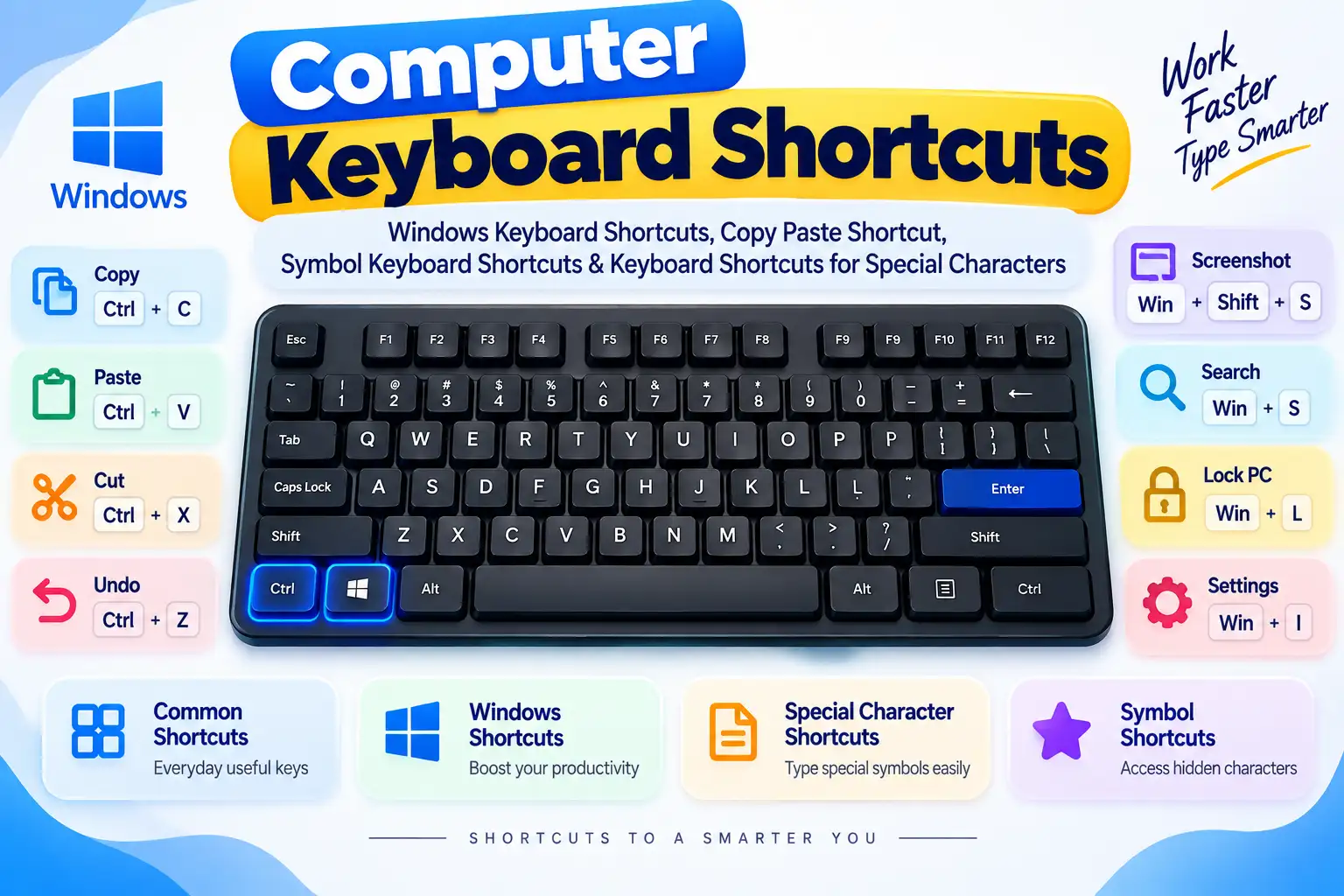
QUICK REFERENCE

Master Circumflex Accent Keyboard Shortcut Matrix (All Letters)

The circumflex accent (ˆ or caret ^) resembles a small rooftop placed above vowels and consonants. In French, it records historical linguistic evolution (lost s sounds); in Portuguese, it denotes closed vowel stress; in Welsh, it elongates vowels (to bach); in Esperanto, it differentiates fundamental consonants; and in mathematics and programming, it functions as the exponent and regex anchor. Below is your complete cross-platform shortcut reference:

Character Windows Alt Code Mac Shortcut Word Shortcut US-International Language / Phonetic Role Unicode / HTML
Standalone (^) Shift+6 / Alt+94 Opt+i, then Space (or Shift+6) Ctrl+Shift+^, then Space Shift+6, then Space Caret / Exponent / Circumflex modifier U+005E | ˆ
ê / Ê Alt+136 / Alt+0202 Opt+i, then e / E Ctrl+Shift+^, then e / E Shift+6, then e French (fête, forêt), Portuguese closed /e/ (você) U+00EA | ê
â / Â Alt+131 / Alt+0194 Opt+i, then a / A Ctrl+Shift+^, then a / A Shift+6, then a French (château), Portuguese /ɐ/ (câmara), Romanian U+00E2 | â
î / Î Alt+140 / Alt+0206 Opt+i, then i / I Ctrl+Shift+^, then i / I Shift+6, then i French (île, dîner), Romanian central /ɨ/ (în), Kurdish U+00EE | î
ô / Ô Alt+147 / Alt+0212 Opt+i, then o / O Ctrl+Shift+^, then o / O Shift+6, then o French (hôtel, pôle), Portuguese closed /o/ (avô), Welsh U+00F4 | ô
û / Û Alt+150 / Alt+0219 Opt+i, then u / U Ctrl+Shift+^, then u / U Shift+6, then u French disambiguation (sûr, mûr, dû), Welsh û U+00FB | û
ŵ / Ŵ Alt+7813 / Alt+7812 Opt+i, then w / W Ctrl+Shift+^, then w / W Shift+6, then w Welsh long /uː/ vowel (dŵr "water") U+1E85 | ẅ
ŷ / Ŷ Alt+0375 / Alt+0374 Opt+i, then y / Y Ctrl+Shift+^, then y / Y Shift+6, then y Welsh long /ɨː/ or /iː/ vowel ( "house") U+0177 | ŷ
ĉ / Ĉ Alt+0265 / Alt+0264 Opt+i, then c / C Ctrl+Shift+^, then c / C Shift+6, then c Esperanto voiceless postalveolar affricate /t͡ʃ/ (ĉambro) U+0109 | ĉ
ĝ / Ĝ Alt+0285 / Alt+0284 Opt+i, then g / G Ctrl+Shift+^, then g / G Shift+6, then g Esperanto voiced postalveolar affricate /d͡ʒ/ (ĝardeno) U+011D | ĝ
ĥ / Ĥ Alt+0293 / Alt+0292 Opt+i, then h / H Ctrl+Shift+^, then h / H Shift+6, then h Esperanto voiceless velar fricative /x/ (ĥemio) U+0125 | ĥ
ĵ / Ĵ Alt+0309 / Alt+0308 Opt+i, then j / J Ctrl+Shift+^, then j / J Shift+6, then j Esperanto voiced postalveolar fricative /ʒ/ (ĵurnalo) U+0135 | ĵ
ŝ / Ŝ Alt+0349 / Alt+0348 Opt+i, then s / S Ctrl+Shift+^, then s / S Shift+6, then s Esperanto voiceless postalveolar fricative /ʃ/ (ŝipo) U+015D | ŝ
WINDOWS OS

How to Type Circumflex Accents on Windows (4 Fast Methods)

Method 1: Windows Alt Codes (Numeric Keypad)

Using the separate 10-key numeric keypad on the right side of your keyboard (ensure Num Lock is active), hold down Alt and type the code:

  • Standalone Caret / Circumflex (^): Shift + 6 or Alt + 94
  • ê (Lowercase E Circumflex): Alt + 136 or Alt + 0234 | Ê (Capital E Circumflex): Alt + 0202
  • â (Lowercase A Circumflex): Alt + 131 or Alt + 0226 | Â (Capital A Circumflex): Alt + 0194
  • î (Lowercase I Circumflex): Alt + 140 or Alt + 0238 | Î (Capital I Circumflex): Alt + 0206
  • ô (Lowercase O Circumflex): Alt + 147 or Alt + 0244 | Ô (Capital O Circumflex): Alt + 0212
  • û (Lowercase U Circumflex): Alt + 150 or Alt + 0251 | Û (Capital U Circumflex): Alt + 0219
  • ŵ: Alt + 7813 | ŷ: Alt + 0375 | ĉ: Alt + 0265 | ĝ: Alt + 0285 | ŝ: Alt + 0349

Method 2: US-International Keyboard (Dead Key System)

On the US-International keyboard layout in Windows, the Shift + 6 (^) key acts as a dead key:

  • Press Shift + 6, release both keys, then type e → gives ê (Capital: Shift+6 then Shift+E = Ê).
  • Press Shift + 6, release, then type a → gives â (Capital: Shift+6 then Shift+A = Â).
  • Press Shift + 6, release, then type i → gives î | o → gives ô | u → gives û | w → gives ŵ | y → gives ŷ.
  • Press Shift + 6, release, then press Space → gives a literal caret symbol (^).

Method 3: Windows Emoji & Symbol Panel (Win + .)

Press Win + . (Windows Key + Period) → click the Symbols (Ω) icon → select Latin Symbols → click any circumflex character to insert it.

APPLE MACOS

How to Type Circumflex Accents on Mac (macOS)

On all MacBooks, iMacs, and Apple Magic Keyboards, macOS features a built-in Option dead key specifically for circumflex accents:

The Mac Option + i Shortcut

1
Hold down the Option (or Alt) key and press the letter i.
2
Release both keys (a highlighted yellow circumflex accent mark ˆ will appear on screen).
3
Immediately type the letter you want to accent:
  • Press e → outputs ê (For capital Ê, press Shift + E).
  • Press a → outputs â (For capital Â, press Shift + A).
  • Press i → outputs î | Press o → outputs ô | Press u → outputs û.
  • Press w → outputs ŵ | Press y → outputs ŷ | Press c → outputs ĉ.
  • Press Space → outputs the standalone modifier circumflex accent mark (ˆ).

The Press-and-Hold Diacritics Menu

Alternatively, press and hold down any vowel key (such as e, a, o, u, i). A numbered popup strip will appear. Press the number corresponding to the circumflex accent or click the character.

MICROSOFT WORD

How to Type Circumflex Accents in Microsoft Word & Office Suite

The Word Ctrl + Shift + ^ Combination

In Microsoft Word on Windows and macOS, the universal shortcut for circumflex accents is:

  • Press Ctrl + Shift + 6 (^), release all keys, then type the letter:
    • Ctrl + Shift + ^, then eê (Capital: Ctrl + Shift + ^, then Shift+EÊ)
    • Ctrl + Shift + ^, then aâ (Capital: Ctrl + Shift + ^, then Shift+AÂ)
    • Ctrl + Shift + ^, then iî | oô | uû
    • Ctrl + Shift + ^, then wŵ | yŷ | cĉ
    • Ctrl + Shift + ^, then Space → standalone ˆ

Microsoft Word Unicode Hex Converter (Alt + X)

Type the 4-digit hexadecimal code directly into your document and immediately press Alt + X:

  • 00EA + Alt + Xê | 00CA + Alt + XÊ
  • 00E2 + Alt + Xâ | 00C2 + Alt + XÂ
  • 00EE + Alt + Xî | 00F4 + Alt + Xô
  • 00FB + Alt + Xû | 0177 + Alt + Xŷ
  • 1E85 + Alt + Xŵ | 0109 + Alt + Xĉ
LINGUISTIC & GRAMMAR RULES

Linguistic, Phonetic & Historical Significance of the Circumflex Accent

The circumflex accent (historically derived from the combination of acute ´ and grave ` accents in Ancient Greek to mark a rising-then-falling tone) performs critical functions in modern orthographies:

French: The Historical Tombstone of the Lost "S" (Le Chapeau)

In French (l'accent circonflexe), the circumflex serves as a historical orthographic marker:

  • Etymological Marker of Lost Consonants: Most frequently, it marks where an 's' existed in Old French and Latin before disappearing from speech around the 13th–14th centuries:
    • fête ← Old French feste (English cognate: feast)
    • forêt ← Old French forest (English cognate: forest)
    • hôpital ← Old French hospital (English cognate: hospital / hostel)
    • château ← Old French chastel (English cognate: castle)
    • île ← Old French isle (English cognate: isle)
    • ancêtre ← Old French ancestre (English cognate: ancestor)
  • Vowel Quality & Phonemic Length: In pôle (/pol/), cône, and apôtre, it forces a closed /o/ sound compared to the open /ɔ/ in pomme.
  • Homograph Disambiguation: Differentiates pairs such as sûr ("sure / certain") vs sur ("on / upon"); mûr ("ripe") vs mur ("wall"); (past participle of devoir) vs du ("of the"); tâche ("task") vs tache ("stain").

Portuguese: Stressed Close-Mid Vowels (O Chapéu)

In Portuguese, the circumflex accent (acento circunflexo) indicates primary stress on close-mid vowels:

  • ê (/e/): você ("you"), mês ("month"), três ("three"), bebê ("baby").
  • ô (/o/): avô ("grandfather" — contrasting with open acute avó "grandmother"), robô ("robot"), metrô ("subway").
  • â (/ɐ/): Stressed central nasalized vowel in câmara ("camera / chamber"), lâmpada ("lamp"), âmbito.

Welsh (Cymraeg): The Little Roof (To Bach)

In Welsh, the circumflex is affectionately known as y to bach ("the little roof"). It functions as a vowel lengthening marker on all seven Welsh vowels (â, ê, î, ô, û, ŵ, ŷ):

  • ("house" — long /ɨː/ or /iː/), dŵr ("water" — long /uː/), ffôn ("telephone"), gêm ("game"), pobl vs pôl.

Esperanto: Consonant Phoneme System (Hat Letters)

In L. L. Zamenhof's international language Esperanto, the circumflex (ĉapelo) is placed over consonants to create distinct phonemic consonants:

  • ĉ: /t͡ʃ/ ("ch" in chairĉambro "room", ĉielo "sky").
  • ĝ: /d͡ʒ/ ("j" in joyĝardeno "garden", ĝenerala).
  • ĥ: /x/ ("ch" in Scottish lochĥoro "chorus").
  • ĵ: /ʒ/ ("s" in measureĵurnalo "newspaper").
  • ŝ: /ʃ/ ("sh" in shipŝipo "ship", ŝanco "chance").

Romanian, Turkish & Mathematics

  • Romanian: â (used inside words like România) and î (used at word boundaries like în) represent the close central unrounded vowel /ɨ/.
  • Turkish (Şapka): Softens consonants before back vowels (kâğıt "paper", rüzgâr "wind", hilâl "crescent").
  • Mathematics & Logic: The caret (`^`) denotes exponentiation ($2^3 = 8$), bitwise XOR, logical conjunction ($\wedge$), and unit vectors ($\hat{i}, \hat{j}, \hat{k}$).
DEVELOPER CHEAT SHEET

Developer & Technical Reference (Unicode, HTML, CSS & JavaScript)

Character Unicode Code Point HTML Named Entity HTML Decimal / Hex CSS Escape JavaScript / JSON
^ (Caret / ASCII Circumflex) U+005E None ^ / ^ \\005E "\\u005E"
ˆ (Modifier Letter Circumflex) U+02C6 ˆ ˆ / ˆ \\02C6 "\\u02C6"
◌̂ (Combining Circumflex) U+0302 None ̂ / ̂ \\0302 "\\u0302"
ê (Lowercase E Circumflex) U+00EA ê ê / ê \\00EA "\\u00EA"
Ê (Capital E Circumflex) U+00CA Ê Ê / Ê \\00CA "\\u00CA"
â (Lowercase A Circumflex) U+00E2 â â / â \\00E2 "\\u00E2"
 (Capital A Circumflex) U+00C2   /  \\00C2 "\\u00C2"
î (Lowercase I Circumflex) U+00EE î î / î \\00EE "\\u00EE"
Î (Capital I Circumflex) U+00CE Î Î / Î \\00CE "\\u00CE"
ô (Lowercase O Circumflex) U+00F4 ô ô / ô \\00F4 "\\u00F4"
Ô (Capital O Circumflex) U+00D4 Ô Ô / Ô \\00D4 "\\u00D4"
û (Lowercase U Circumflex) U+00FB û û / û \\00FB "\\u00FB"
Û (Capital U Circumflex) U+00DB Û Û / Û \\00DB "\\u00DB"
ŵ (Welsh W Circumflex) U+1E85 None ẅ / ẅ \\1E85 "\\u1E85"
ŷ (Welsh Y Circumflex) U+0177 None ŷ / ŷ \\0177 "\\u0177"
ĉ (Esperanto C Circumflex) U+0109 ĉ ĉ / ĉ \\0109 "\\u0109"
ĝ (Esperanto G Circumflex) U+011D ĝ ĝ / ĝ \\011D "\\u011D"
ŝ (Esperanto S Circumflex) U+015D ŝ ŝ / ŝ \\015D "\\u015D"
FREQUENTLY ASKED QUESTIONS

Frequently Asked Questions About the Circumflex Accent

The circumflex accent (ˆ or caret ^) is a peaked, rooftop-shaped diacritical mark placed over vowels and consonants. In French (l'accent circonflexe or chapeau), it indicates historical consonant deletion (such as s in château, fête, forêt, hôpital) or vowel quality. In Portuguese (chapéu), it marks stressed close-mid vowels (você, avô). In Welsh (to bach), it marks vowel length (tŷ, dŵr). In Esperanto, it creates distinct phonemes (ĉ, ĝ, ĥ, ĵ, ŝ), and in mathematics/computing, the caret (^) denotes exponentiation and RegEx anchors.
For the standalone caret symbol (^), press Shift + 6 or use Alt + 94. For individual vowels: â is Alt + 131 (or Alt + 0226); ê is Alt + 136 (or Alt + 0234); î is Alt + 140 (or Alt + 0238); ô is Alt + 147 (or Alt + 0244); and û is Alt + 150 (or Alt + 0251). For uppercase letters: Â is Alt + 0194; Ê is Alt + 0202; Î is Alt + 0206; Ô is Alt + 0212; and Û is Alt + 0219. Welsh ŵ is Alt + 7813 and ŷ is Alt + 0375.
On macOS, press Option + i, release both keys, and immediately type the letter you want to accent (e.g. Option + i then e gives ê; Option + i then a gives â; Option + i then o gives ô; Option + i then Space gives standalone ˆ). You can also press and hold down the letter key on your keyboard to reveal the numeric diacritics popup menu.
In Microsoft Word, press Ctrl + Shift + 6 (which triggers the caret ^ modifier), release all keys, and type the letter you want to accent (e.g. Ctrl + Shift + 6 then e gives ê; Ctrl + Shift + 6 then o gives ô). For capital letters, press Ctrl + Shift + 6 then Shift + E for Ê. You can also type the 4-digit hexadecimal code followed by Alt + X (e.g. 00EA + Alt + X = ê).
On the US-International keyboard layout, the Shift + 6 (^) key acts as a dead key. Press Shift + 6, release both keys, and press any vowel (a, e, i, o, u, w, y) to produce â, ê, î, ô, û, ŵ, or ŷ. If you want a literal caret symbol, press Shift + 6 followed by the Spacebar.
In Old French, many words contained an 's' after a vowel that was pronounced (e.g. feste, hostel, forest, isle, castel). Over centuries, the 's' sound became silent and dropped out of speech. In 1740, the Académie Française replaced the silent 's' with the circumflex accent, giving modern French fête, hôtel, forêt, île, and château. The English language borrowed many of these words earlier when the 's' was still present (e.g. feast, hostel/hospital, forest, isle, castle).
The standalone circumflex modifier is ˆ (U+02C6) and combining circumflex is ̂ (U+0302). For letters: â is â (U+00E2); ê is ê (U+00EA); î is î (U+00EE); ô is ô (U+00F4); and û is û (U+00FB). Uppercase entities include  (U+00C2), Ê (U+00CA), Î (U+00CE), Ô (U+00D2), and Û (U+00DB).
On iOS and Android virtual touchscreen keyboards, press and hold down the letter key (e.g. 'e', 'a', 'i', 'o', 'u', 'w', 'y', 'c', 'g', 'h', 'j', 's'). A popup diacritics bubble will appear displaying all available accented variants. Without lifting your finger, slide across to the circumflex character (â, ê, î, ô, û, ŵ, ŷ) and release.
COMPLETE A TO Z ACCENTED LETTERS DIRECTORY

Explore All Individual A–Z Accented Letter Guides

Need shortcuts for specific letters or other accent types (acute, grave, umlauts, tildes, cedillas, carons)? Browse our full suite of 26 dedicated guides:

é è ê ë ē ė ę ě

How to Type E with Accent

Master French ê circumflex (Alt 136), acute é (Alt 130), grave è, and umlaut ë.

Read E Guide →
á à â ä ã å ā

How to Type A with Accent

Master French â circumflex (Alt 131), Spanish á, French à, and German ä.

Read A Guide →
í ì î ï ī į ı ĩ

How to Type I with Accent

Master French î circumflex (Alt 140), Spanish í, Italian ì, and Turkish dotless ı.

Read I Guide →
ó ò ô ö õ ø ō ő

How to Type O with Accent

Master French ô circumflex (Alt 147), Spanish ó, German ö, and Nordic ø.

Read O Guide →
ú ù û ü ů ű ū

How to Type U with Accent

Master French û circumflex (Alt 150), Spanish ú, and German ü (Alt 129).

Read U Guide →
ŵ ẃ ẁ ẅ ẇ

How to Type W with Accent

Master Welsh ŵ to bach (Alt 7813), acute ẃ, and grave ẁ.

Read W Guide →
ý ỳ ŷ ÿ ỹ ỵ

How to Type Y with Accent

Master Welsh ŷ to bach (Alt 0375), Czech ý, and French ÿ.

Read Y Guide →
ç ć č ĉ ċ

How to Type C with Accent

Master Esperanto ĉ (Alt 0265), French cédille ç, and Polish ć.

Read C Guide →
´ é á í ó ú ć

How to Type Acute Accent (´)

Master standalone ´ (Alt 0180), French é, Spanish á/é/í/ó/ú, and Polish ć/ń/ś/ź.

Read Acute Guide →
` è à ì ò ù ỳ

How to Type Grave Accent (`)

Master standalone ` (Alt 96), French è/à/ù, Italian caffè/città, and Scottish Gaelic length.

Read Grave Guide →
á é í ó ú ñ ü

Master Accented Letters Guide

All A–Z accents, Windows Alt codes, Mac Option dead keys, Word formulas, and Google Docs.

Read Master Guide →
Â Ê Î Ô Û Ŵ

Interactive Accent Keyboard

1-click interactive virtual keyboard for typing and copying every international accent mark.

Launch Accent Tool →

Explore All Master Typing Guides:

How to Type A with Accent (á) How to Type B with Accent (ḃ) How to Type C with Accent (ç) How to Type D with Accent (ď) How to Type E with Accent (é) How to Type F with Accent (ḟ) How to Type G with Accent (ğ) How to Type H with Accent (ħ) How to Type I with Accent (í) How to Type J with Accent (ĵ) How to Type K with Accent (ķ) How to Type L with Accent (ł) How to Type M with Accent (ḿ) How to Type N with Accent (ñ) How to Type O with Accent (ó) How to Type P with Accent (ṕ) How to Type Q with Accent (q́) How to Type R with Accent (ř) How to Type S with Accent (š) How to Type T with Accent (ť) How to Type U with Accent (ú) How to Type V with Accent (ṽ) How to Type W with Accent (ŵ) How to Type X with Accent (ẋ) How to Type Y with Accent (ý) How to Type Z with Accent (ž) How to Type Acute Accent (´) How to Type Grave Accent (`) How to Type Circumflex Accent (^) Master Accented Letters Guide How to Type Upside Down ? (¿) How to Type Euro (€) How to Type Degree (°) How to Type Em Dash (—) How to Type Theta (θ) How to Type Square Root (√) How to Type At Symbol (@) All Typing Guides Hub